
TLDR
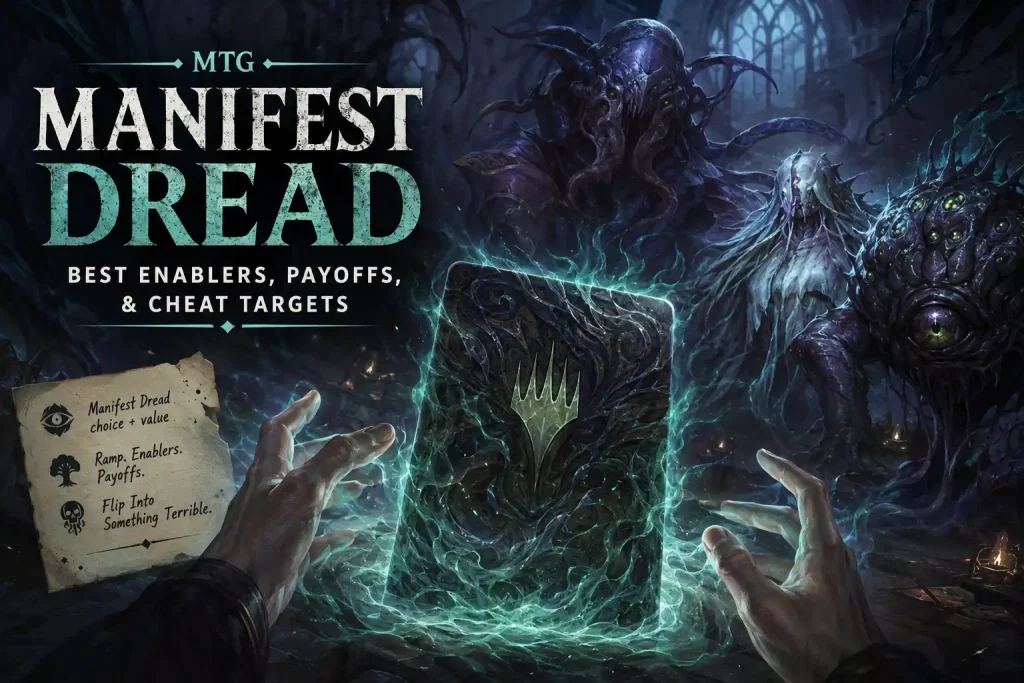
The best MTG Manifest Dread cards do one of three things: create face-down creatures efficiently, reward you for turning permanents face up, or cheat expensive permanents onto the battlefield before anyone has time to ask if this is “healthy gameplay.”
Zimone, Mystery Unraveler is the centerpiece for most serious Manifest Dread decks because she enables the mechanic and turns face-down permanents face up with landfall. Abhorrent Oculus, Hauntwoods Shrieker, Paranormal Analyst, Growing Dread, Threats Around Every Corner, and Valgavoth’s Onslaught are the strongest support cards. For older Manifest synergy, Scroll of Fate, Whisperwood Elemental, Mastery of the Unseen, and Phyrexian Dreadnought are still very real, because Magic never fully lets an old mistake retire.
Manifest Dread is the kind of mechanic that looks adorable right up until a face-down 2/2 becomes Progenitus, Omniscience, or some other financial decision with teeth. The best MTG Manifest Dread cards combine selection, graveyard value, and the ancient Commander tradition of making the table ask, “Wait, what is under that?”
Manifest Dread first appeared in Duskmourn: House of Horror as a scarier, cleaner version of Manifest. Original Manifest put a card from the top of your library onto the battlefield face down as a 2/2 creature. Manifest Dread improves that by looking at the top two cards, choosing one to become the face-down creature, and putting the other into your graveyard. Choice. Graveyard fuel. A suspiciously innocent 2/2. Truly, nothing bad has ever happened after that sentence.
How Manifest Dread Works in MTG
To manifest dread, you look at the top two cards of your library. You put one onto the battlefield face down as a 2/2 colorless creature and put the other into your graveyard. The face-down card has no name, no mana cost, no creature types, no abilities, and a mana value of 0 while it is face down.
If the manifested card is a creature card, you can turn it face up any time you have priority by revealing it and paying its mana cost. This is a special action, not a spell or activated ability, so it does not use the stack. Your opponent cannot respond to the act of turning it face up. They can respond before or after, because Magic players must always be given at least one opportunity to hold priority dramatically.
Manifest Dread is stronger than original Manifest because it gives you card selection. If you see a large creature and a removal spell, you can choose which card becomes your hidden threat and which card goes to the graveyard. In graveyard decks, that second card is not always “lost.” Sometimes it is just moving to its second office.
What Makes the Best MTG Manifest Dread Cards Powerful?
The best cards in this archetype fall into four groups:
| Category | What It Does | Best Examples | Main Tradeoff |
|---|---|---|---|
| Enablers | Create face-down creatures | Zimone, Abhorrent Oculus, Hauntwoods Shrieker | Can be slow without support |
| Payoffs | Reward face-down or face-up permanents | Growing Dread, Threats Around Every Corner, Vannifar | Needs a board to matter |
| Cheat targets | Become absurd when flipped | Progenitus, Omniscience, Phyrexian Dreadnought | Bad draws without enablers |
| Glue cards | Smooth the deck | Paranormal Analyst, Scroll of Fate, landfall ramp | Less flashy, more necessary |
A good Manifest Dread deck does not just jam huge cards and hope. That is a strategy, technically, in the same way falling down stairs is transportation. You want a mix of repeatable enablers, ways to turn cards face up, and enough normal gameplay to survive when your deck does not immediately do the haunted-house party trick.
Best MTG Manifest Dread Cards for Enabling the Strategy
Zimone, Mystery Unraveler
Zimone, Mystery Unraveler is the cleanest Commander centerpiece for Manifest Dread. Her landfall ability manifests dread the first time it resolves each turn. On later resolutions that same turn, she can turn a permanent you control face up.
That last part matters. Normal Manifest only lets you pay to turn creature cards face up. Zimone can turn face-down permanents face up, which opens the door for enchantments and artifacts like Omniscience. That is where the deck stops being a cute Simic value pile and starts acting like it found a legal loophole in the basement.
Zimone rewards fetch lands, extra land drops, bounce lands, and effects like Growth Spiral, Harrow, and Cultivate. If you are proxy testing a Zimone Commander build before buying the weirdest stack of Simic cards known to cardboard, ProxyKing’s MTG proxy shop is the sensible place to start. Sensible, of course, being relative. This is still a format where people put 100 single cards in sleeves and call it relaxation.
Abhorrent Oculus
Abhorrent Oculus is one of the best raw-rate Manifest Dread cards. It is a 5/5 flyer for three mana, which sounds fake until you remember it asks you to exile six cards from your graveyard as an additional cost. The bouncer is strict.
Once it is on the battlefield, Abhorrent Oculus manifests dread at the beginning of each opponent’s upkeep. In Commander, that means it can generate multiple face-down creatures every turn cycle. It also keeps putting cards into your graveyard, which helps delirium, recursion, and other graveyard-adjacent nonsense.
The tradeoff is obvious: you need graveyard setup before Oculus is castable. It is excellent in decks that naturally mill, discard, surveil, sacrifice, or trade resources early. It is embarrassing in hands that do nothing until turn six. Build accordingly.
Hauntwoods Shrieker
Hauntwoods Shrieker attacks and manifests dread, which makes it a repeatable engine in green. The real appeal is its activated ability: for 
 , it can reveal a face-down permanent and turn it face up if it is a creature card.
That means Shrieker does not merely make mystery creatures. It helps cash them in. It is especially good when your deck is full of creatures that are expensive to cast but devastating once face up. You know, fair things. Balanced things. Giant cardboard incidents.
The weakness is that Hauntwoods Shrieker has to attack to generate value. If your table is packed with removal or early blockers, protect it or expect it to have a brief but educational career.
Paranormal Analyst
Paranormal Analyst is not as flashy as a massive flyer or a landfall commander, but it may be one of the most important glue cards in the archetype. Whenever you manifest dread, it lets you put the card you put into your graveyard this way into your hand.
That turns Manifest Dread from selection into actual card advantage. Instead of choosing between “creature now” and “card later,” you often get both. Rude, efficient, and exactly what blue players claim they are not doing while doing it.
Paranormal Analyst is best in decks that manifest dread repeatedly, especially Zimone shells. It is weaker if you only have a few Manifest Dread cards, since a 1/3 for two mana needs help to justify its chair at the table.
Best Payoffs for Manifest and Manifest Dread
Growing Dread
Growing Dread is a compact payoff. It has flash, manifests dread when it enters, and puts a +1/+1 counter on a permanent whenever you turn a permanent face up.
That is exactly what this deck wants. It gives you a face-down creature, then rewards you for doing the thing your deck was already built to do. The counters also remain useful if the card turns face up later, so your small unknown creature can become a larger known problem.
Growing Dread is especially strong in Simic builds with Zimone because it is both an enabler and a payoff. It is not a game-ending bomb by itself, but it makes every face-up moment a little worse for your opponents. Death by incremental value. The most respectable kind of nonsense.
Threats Around Every Corner
Threats Around Every Corner is one of the best ramp payoffs for face-down decks. When it enters, it manifests dread. Then, whenever a face-down permanent enters under your control, you search for a basic land and put it onto the battlefield tapped.
In a normal creature deck, this would be merely fine. In a Manifest Dread deck, it can become a land engine. Every new face-down permanent ramps you, and in Zimone, those extra land drops and landfall triggers are exactly how the deck starts doing rude things ahead of schedule.
The tradeoff is that it costs four mana and does nothing explosive without follow-up. Play it in builds with enough repeatable face-down production. Do not put it into a deck with six enablers and vibes.
Valgavoth’s Onslaught
Valgavoth’s Onslaught is the scalable finisher. It costs 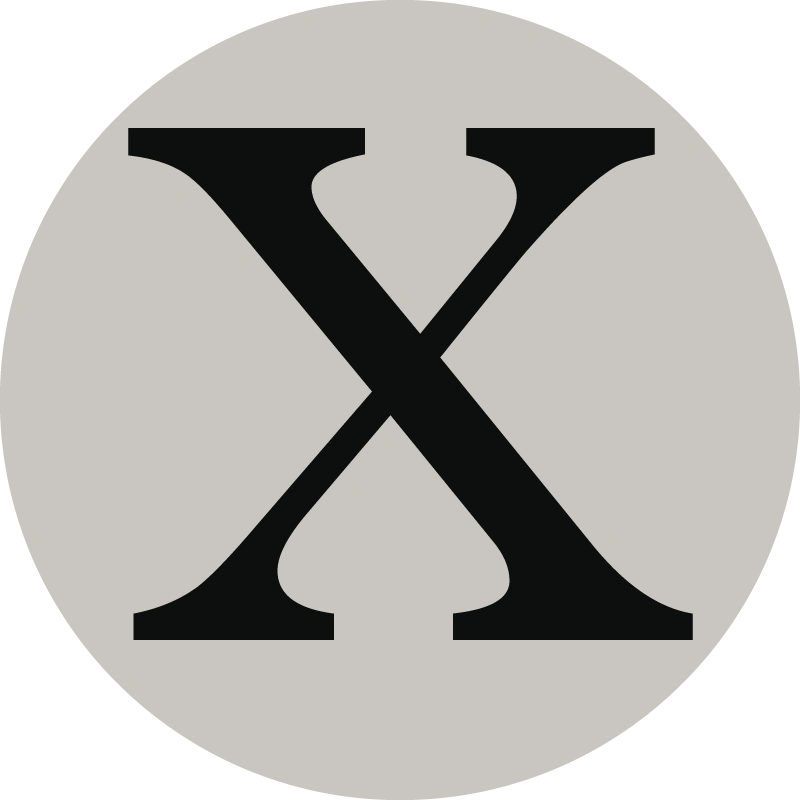 , manifests dread X times, then puts X +1/+1 counters on each of those creatures.
This card is not subtle. It says, “Here are several mystery creatures, and now they are large.” Sometimes that is all the strategic nuance a Commander table deserves.
Onslaught shines in ramp-heavy builds, especially those using Threats Around Every Corner or green land acceleration. The problem is that it wants a lot of mana. If your deck is not built to produce that mana, Onslaught will sit in your hand looking dramatic and doing absolutely nothing, which is also how many seven-mana spells spend their lives.
Vannifar, Evolved Enigma
Vannifar, Evolved Enigma uses cloak rather than Manifest Dread, but she belongs in the same conversation. Cloak also creates face-down 2/2 creatures, and Vannifar can put +1/+1 counters on each colorless creature you control.
Face-down manifested creatures are colorless, so Vannifar’s counter mode buffs the same board. She also provides another way to hide cards from hand, which pairs well with a deck that wants opponents guessing whether your 2/2 is a speed bump or a lawsuit.
Vannifar is not a Manifest Dread card by name, but she is a face-down payoff that plays nicely with the package.
Older Manifest Cards That Still Matter
Original Manifest cards are worth considering because they give the deck redundancy. Manifest Dread is better, but old Manifest still puts mystery creatures onto the battlefield, and sometimes “worse version of a good thing” is still playable. See also: every budget mana base ever assembled.
Scroll of Fate is excellent because it lets you put a card from your hand onto the battlefield face down. That means you control what is hidden. This is much better than praying to the top of your library like a medieval peasant asking the weather for mercy.
Whisperwood Elemental creates a face-down creature at the end of your turn and can protect your nontoken creatures from many board wipes by sacrificing itself. It is slow, but it provides steady pressure.
Mastery of the Unseen is a repeatable Manifest engine and lifegain payoff. It is mana-hungry, but if your table is slower, it can bury opponents under a suspiciously calm pile of 2/2s.
Reality Shift is more of a removal spell than a synergy card, but it is one of the most efficient cards with Manifest text. Exiling a creature for two mana is strong, even if the opponent gets a face-down 2/2. Usually, that 2/2 is less terrifying than the creature you exiled. Usually.
Best Big Cards to Cheat Face Up
The dream of Manifest Dread is simple: hide something enormous, then reveal it before the table can organize a committee.
Progenitus is a popular huge threat because protection from everything makes it very hard to answer once face up. It is not easy to cast normally, which is why Zimone-style free face-up effects are attractive.
Omniscience is one of the nastiest Zimone targets because normal manifest rules will not let you pay to turn a noncreature enchantment face up. Zimone can turn a face-down permanent face up through her ability, which is what makes the card so appealing in that shell.
Phyrexian Dreadnought is the classic old-school trick. If you manifest it and then turn it face up, it did not enter the battlefield face up, so you avoid the usual “sacrifice creatures with total power 12” problem. A one-mana 12/12 trampler is not subtle. It is, however, very funny if your sense of humor is damaged in the usual Magic player way.
Other strong creature targets include Worldspine Wurm, Ulamog variants, Koma, Cosmos Serpent, Nezahal, Primal Tide, and Altanak, the Thrice-Called. The correct choice depends on your format, budget, and tolerance for being targeted by three players with newly unified political beliefs.
A Simple Deckbuilding Framework
Use this structure when building Manifest Dread in Commander:
- Play 10 to 14 enablers that create face-down creatures.
- Play 6 to 10 payoffs that reward manifesting, face-down permanents, or turning cards face up.
- Play 6 to 10 ways to trigger landfall or create extra land drops if Zimone is your commander.
- Play 5 to 8 big payoff permanents, not 25. You still need to play Magic when your opening hand is not a prophecy.
- Add protection. Your face-down plan is cute until someone casts Farewell and files your entire board into exile.
If your deck is casual, proxies are a good way to test whether the big-target package actually works before spending money on cards you may cut after two games. For a broader comparison of proxy methods, read ProxyKing’s guide to the best ways to proxy a whole deck in MTG. For store play, especially FNM, check the event rules first. ProxyKing also has a clear breakdown of whether MTG proxies can be used at FNM or tournaments.
Are Manifest Dread Cards Worth Adding to a Deck?
Yes, if the deck is built around them. Manifest Dread is not a random value package you can toss into any deck and expect applause. It needs density. It needs payoffs. It needs ways to turn cards face up. Without those, you are mostly making 2/2s and pretending the mystery is enough.
In Commander, Zimone is the cleanest home. In casual 60-card brews, Hauntwoods Shrieker and Abhorrent Oculus give the mechanic real teeth. In older formats and kitchen-table builds, Scroll of Fate and Phyrexian Dreadnought add the kind of legacy weirdness that keeps Magic rules managers gainfully employed.
The best version of the deck is not just “big things face down.” It is a value engine that uses face-down creatures as ramp, card advantage, protection, and pressure. The big reveal is the fun part. The boring infrastructure is why it actually works. As usual, the responsible part is less glamorous and more important. Very rude of it.
FAQs
What is the best Manifest Dread card in MTG?
Zimone, Mystery Unraveler is the best overall Manifest Dread card for Commander because she creates face-down creatures and turns permanents face up through landfall. Abhorrent Oculus is one of the strongest individual enablers because it can manifest dread on each opponent’s upkeep.
Is Manifest Dread better than Manifest?
Yes, in most cases. Manifest Dread gives you a choice between the top two cards of your library and puts the other card into your graveyard. Original Manifest usually gives less control, although older cards like Scroll of Fate and Whisperwood Elemental are still strong in the right deck.
Can Manifest Dread turn noncreature cards face up?
Normal Manifest Dread only lets you pay to turn a manifested creature card face up. Noncreature cards generally stay face down unless another effect, such as Zimone’s ability, specifically turns a permanent face up or an effect exiles and returns the card face up.
Does turning a manifested creature face up trigger enter-the-battlefield abilities?
No. Turning a face-down creature face up does not make it enter the battlefield again. It was already on the battlefield. Magic is fussy about this because apparently precision matters when cardboard monsters are involved.
Are Manifest Dread decks good for Commander?
Yes, especially with Zimone, Mystery Unraveler. The deck can generate value through landfall, ramp, graveyard setup, and surprise threats. It does need careful deck construction, though. Too many huge targets and not enough setup will make the deck clunky.
Can I use proxies to test a Manifest Dread deck?
In casual play, many groups allow proxies for testing, budget, and accessibility, but always ask your pod first. Sanctioned events require authentic Magic cards except for limited judge-issued proxies during an event, so do not bring playtest proxies to a sanctioned tournament and expect the rules to become flexible out of pity.
References
- Wizards of the Coast, Duskmourn: House of Horror Release Notes
- Wizards of the Coast, Gatherer Card Database: Zimone, Mystery Unraveler
- Scryfall, Manifest Dread card search
- Scryfall, Growing Dread
- Scryfall, Threats Around Every Corner
- Scryfall, Vannifar, Evolved Enigma
- Draftsim, Manifest and Manifest Dread in MTG: Rules, History, and FAQ
- Draftsim, The Best Manifest and Manifest Dread Cards in Magic Ranked
- Wizards of the Coast, On Proxies, Policy, and Communication