

TLDR:
- Sol Ring and Arcane Signet are still the “start here” rocks for most Commander decks.
- Mana Crypt and Jeweled Lotus are banned in Commander, so this list focuses on legal options (with a banned section for context).
- If you want the old-school “explode on turn one” vibe, the legal replacements are Mana Vault, Chrome Mox, Mox Diamond, Lotus Petal, and sometimes Grim Monolith.
- If you’re not playing cEDH, your real MVPs are the boring workhorses: Fellwar Stone, Talismans, and Signets.
If you want to build a competitive MtG deck in Commander, ramp is super important. Mana rocks are artifacts that can produce mana. This can give you a leg up early in the game because you can play as many of them on your turn as you can afford.
Mana rocks let you drop beefier creatures or spells faster than your opponents. As a result, they are central to virtually any competitive constructed format.
The most broken mana rocks must be the OG Moxen from Power 9. But, of course, these are banned in most formats, so we won’t be covering them today.
I’m writing this article with Commander in mind. EDH (and cEDH) is the perfect format for Mana Rocks since you can use so many different ones. Of course, you can totally apply this information to other formats like Pioneer and Modern.
Without further ado, here is the list. Read on for all the details.
- Sol Ring
- Arcane Signet
- Mana Vault
- Lotus Petal
- Chrome Mox
- Mox Diamond
- Fellwar Stone
- Grim Monolith
- Lion’s Eye Diamond
- The Great Henge
- Medallion Set
Quick 2026 note before we start throwing shiny rocks at the table: Mana Crypt and Jeweled Lotus are banned in Commander. You’ll still see them in older decklists, old primers, and in the distant memories of people who miss turn-one nonsense. I’m including them in a “Banned” section at the end for context, but the ranked picks in this article are Commander-legal as of this update.
S-Tier Mana Rocks – Must have Mana Rocks
These are the rocks I’d look at first when I’m trying to make a deck feel unfair in the early turns. “No downsides” is a lie we tell ourselves to feel better, but in competitive Commander, the costs on these cards are usually worth paying because the speed matters more than the feelings of the card you exiled.
Sol Ring:
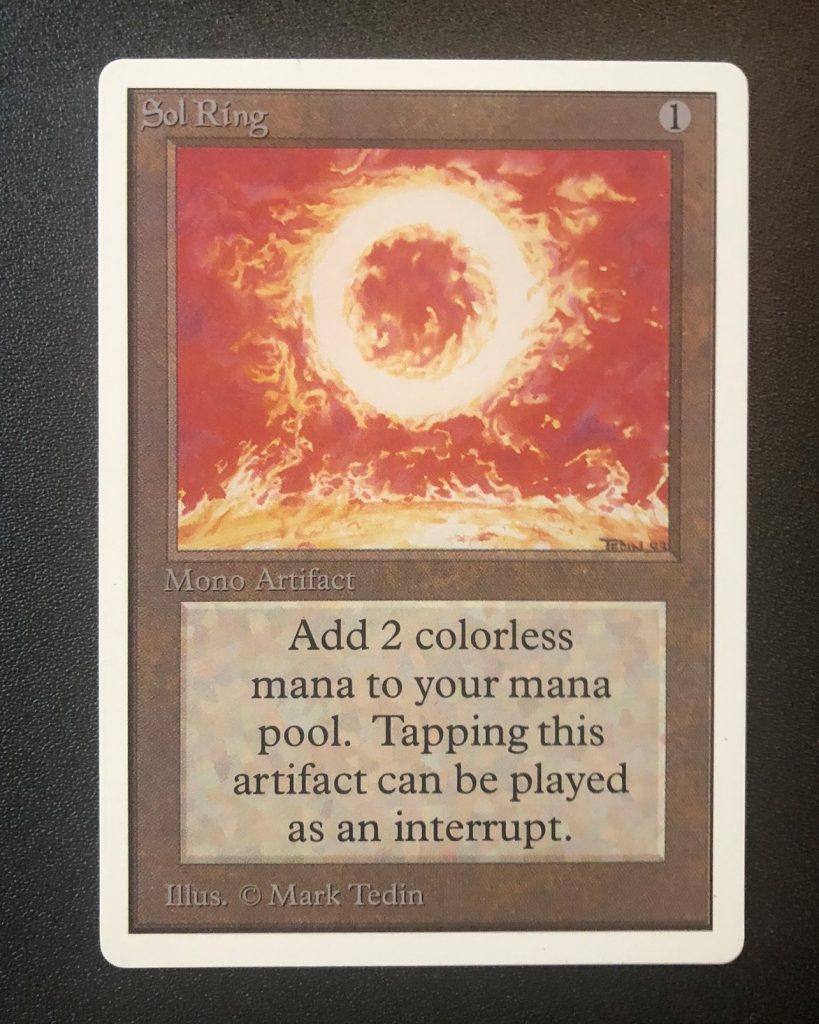
Sol Ring epitomizes Commander like no other card. It comes with almost every preconstructed deck and is practically mandatory for casual and competitive play alike. You can drop a 4 CMC bomb on turn two. Or, if you get lucky on the draw, it can lead to an even more epic start. Turn 1 Sol Ring, tap for two, cast Talisman of Dominance, tap for one, and cast Mana Vault. Your opponents will be crapping bricks, wondering what is coming on turn two with eight mana.
Some people want it banned, but let’s all admit that it makes the game more interesting.
Mana Vault:
Mana Vault is one of the closest legal things Commander has left to a “ritual you can keep.” It’s one mana for three colorless, which means it can jump you straight into your commander, an early value engine, or the kind of opening that makes the table suddenly remember they packed artifact removal.
The catch is that it doesn’t untap normally, and it’s not pretending to. Think of it as burst mana first, “long-term rock” second. If your deck wants one big early push, Mana Vault is the push.
Arcane Signet:
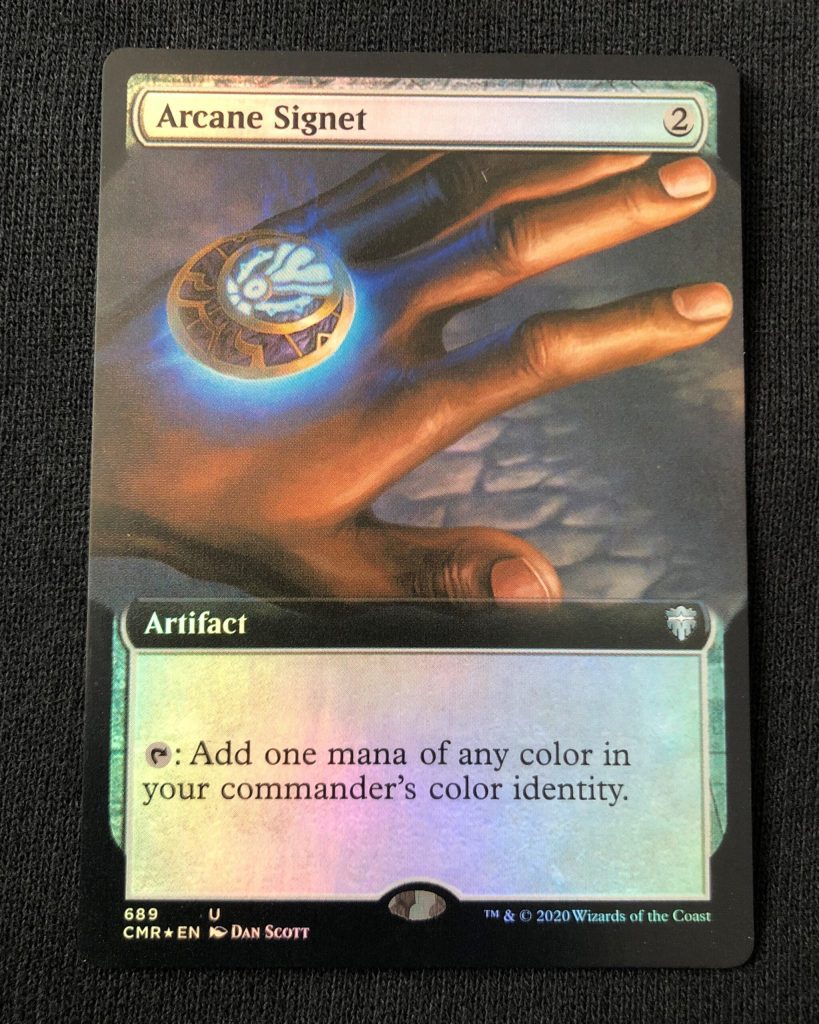
This may be the best mana-fixing rock out there. It’s not as busted as the above two cards, but still great. In particular, for multi-colored decks – for three, four, or five-colored decks I’d call this mandatory.
Arcane Signet is better than other signets because it can be tapped on the turn it’s dropped.
Fellwar Stone:
Fellwar Stone is the best two-mana rock that doesn’t pretend it’s doing something cute. In multiplayer Commander, someone at the table is almost always playing the colors you need, so it ends up reading like “two mana: fix your mana” more often than it has any right to.
If Arcane Signet is the gold standard for fixing, Fellwar Stone is the off-brand version that somehow tastes the same.
Chrome Mox:
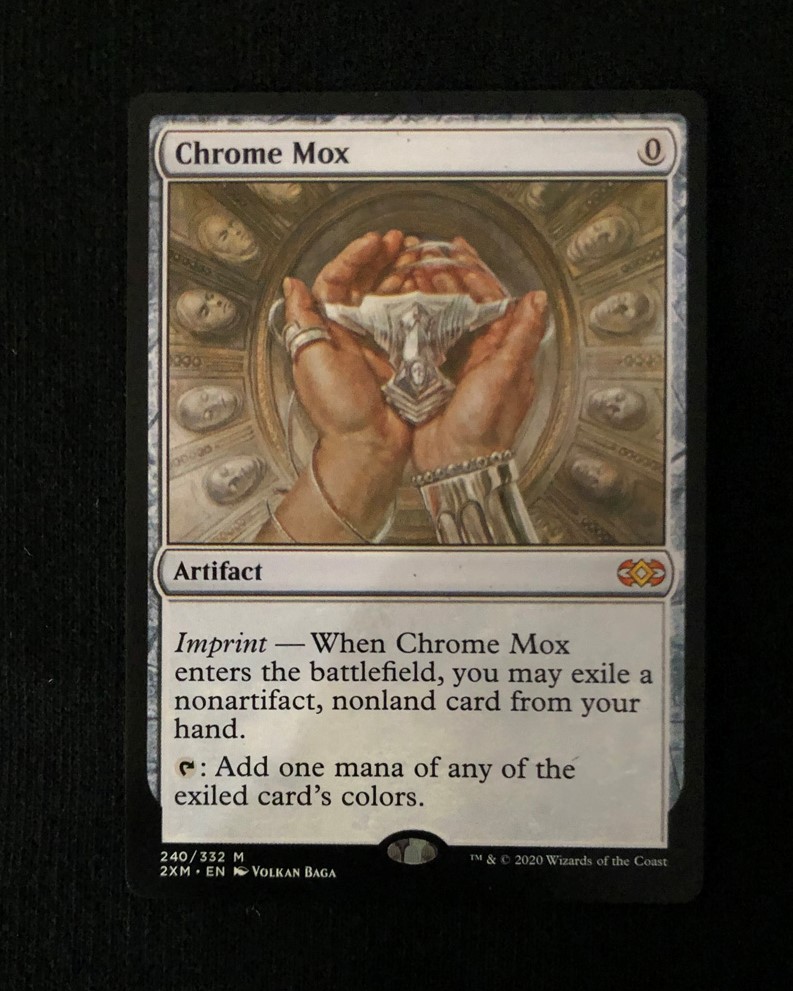
Chrome Mox is a great, affordable, mana rock that works in any format. The best part about Chrome Mox is that it is a zero mana artifact. It can also help with mana-fixing, which is excellent for early game.
Chrome Mox has over 25 Top 8 finishes in Worlds and Pro Tours
It works through its ‘Imprint’ ability. This lets you effectively cycle a dud card in your hand for a powerful mana rock.
Mox Diamond:
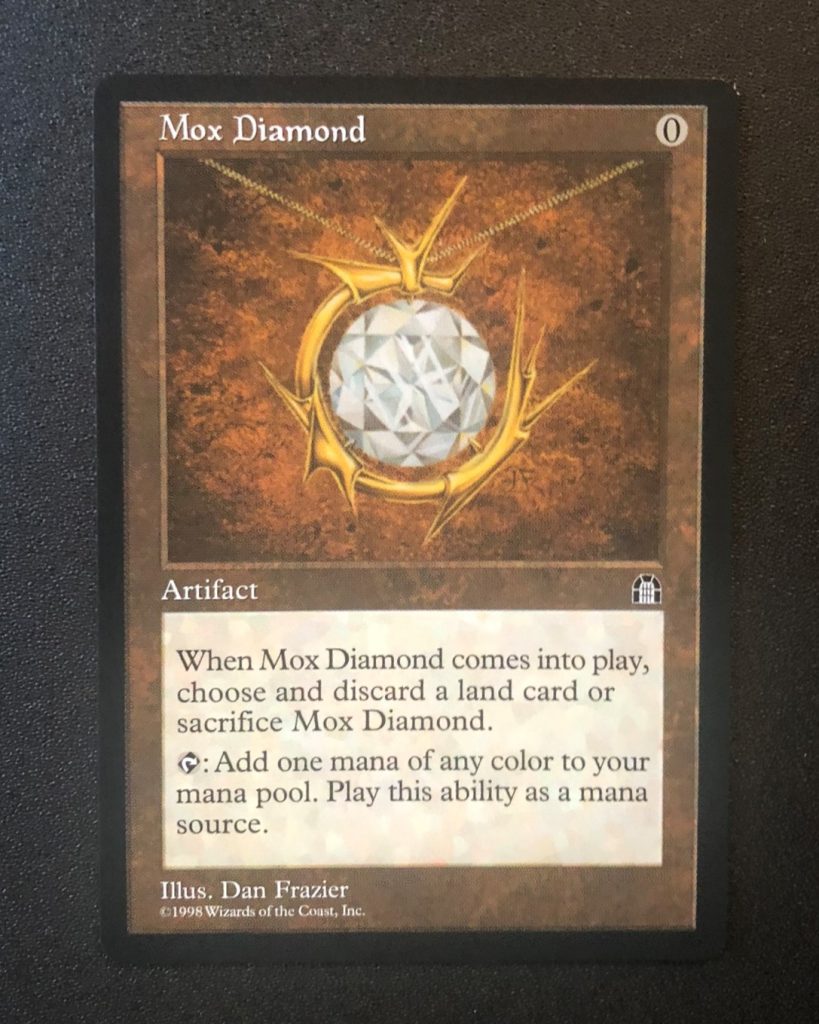
Mox Diamond is basically an auto-include for cEDH. It’s a free mana rock that taps for any color. In many cases, this is well worth the price of a basic land. It’s excellent for mana fixing and has seen a lot of use in 4 color partner builds.
For more casual Commander pods, Mox Diamond also has its place. But it will be more dependent on the deck that you are running.
For land-centric commanders, it’s perfect. It’s also great for recursion decks (think Crucible of Worlds or Meren decks). Finally, I’d use it in almost any artifact-centered deck build.
Lotus Petal:
Lotus Petal is the cleanest kind of acceleration: free, makes one mana of any color, and then it’s gone. That sounds small until you realize how many games are decided by “do I get to be one mana ahead on turn one.”
Petal is at its best when your deck is trying to double-spell early, power out a key commander, or enable a fast combo turn. Late game it’s a mediocre topdeck, but so is most of your deck when you’re already losing. Petal at least tries.
Niche Mana Rocks – Good for Specific Situations
Lion’s Eye Diamond:
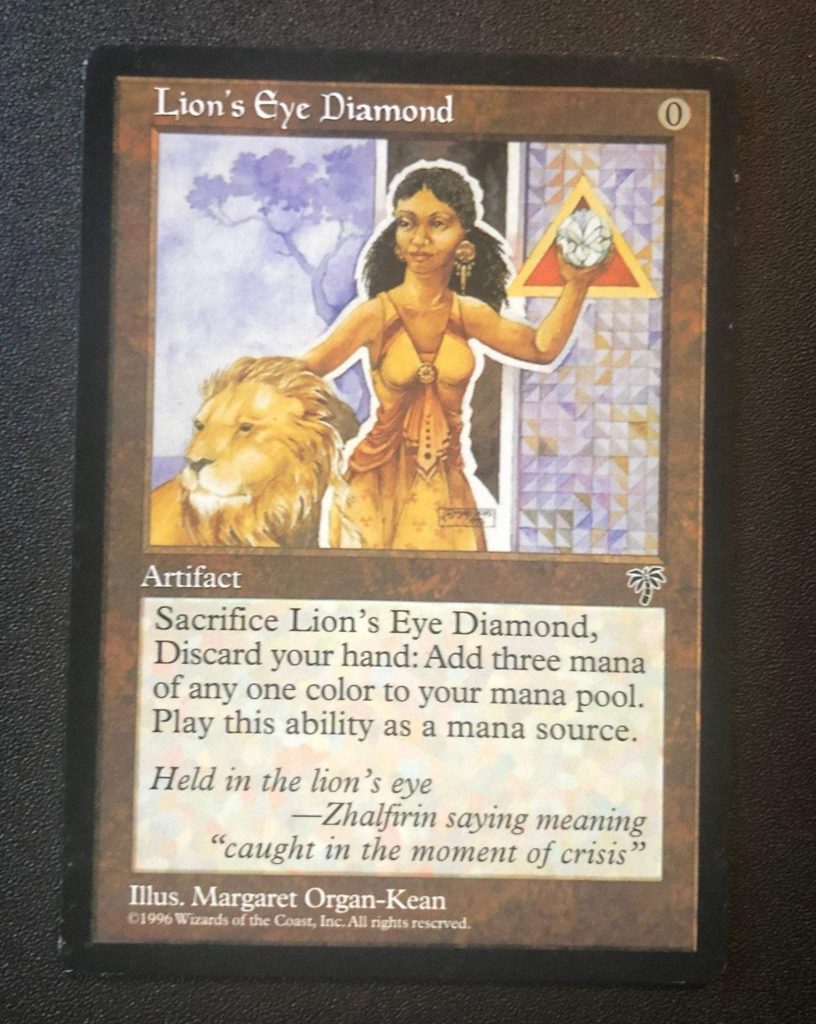
Lion’s Eye Diamond doesn’t get much play simply because of its massive price tag. You’ll be lucky to get your hands on one for $500. Luckily you can get our proxy version for just four doll hairs. That said, it is a very useful card in certain situations.
It’s a zero-cost artifact. When you sacrifice it, you discard your hand and can add three mana to your mana pool. This is another ideal card for graveyard decks. Who cares if you discard your hand if you can play everything from your graveyard anyway?
In this case, it is practically better than a Black Lotus, because it can get key cards into your graveyard on the first turn.
It’s also a shoo-in card for an “Ad Nauseam” based deck. It’s a good card to draw into because it doesn’t cause you to lose life and it increases your storm count.
Finally, use it with Infernal Tutor to turn it into Demonic Tutor, and net one mana.
Grim Monolith:
Grim Monolith is another mana-positive burst rock, basically Mana Vault’s colder, more expensive cousin. You pay two, you get three, and you’re immediately ahead. Like Mana Vault, it doesn’t untap normally, so it’s not here to help you cast fair Magic. It’s here to help you cast your Magic.
If your deck cares about big early mana, artifact untap synergies, or just wants to threaten explosive turns, Grim Monolith earns its slot. If your pod is mid-power and allergic to fast mana, this is also a great way to get politely uninvited.
Not Technically Rocks But Plays Like Them
The Medallion Set:
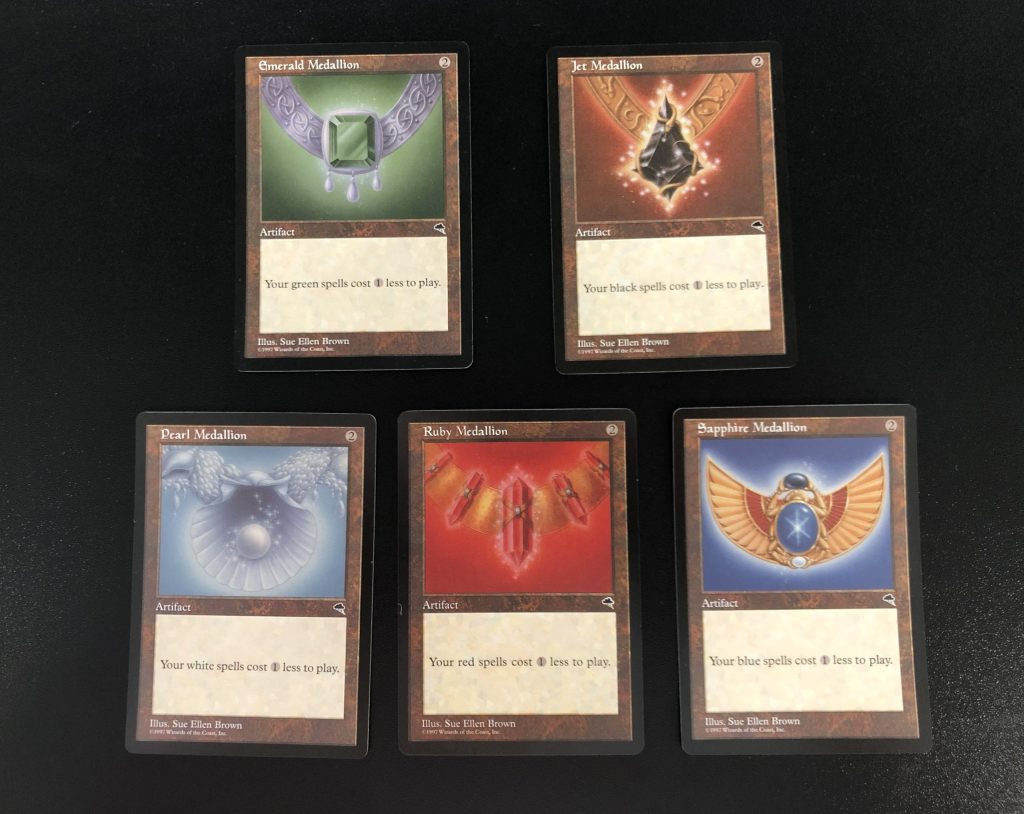
The Medallions aren’t technically mana rocks since they don’t produce mana. But I generally lump them in because the outcome is pretty much the same. The medallions have the effect of reducing the mana costs of spells. Since this effect applies to all spells played on a turn, they can actually do MORE work than typical mana rocks.
Medallions also grow in power throughout the game. With a Sapphire Medallion on the board, for example, you may play 1 spell per turn early game, 2-3 spells on a turn midgame, and more late game. Each of those spells’ CMC is reduced.
Medallions also stack. So if you have a bunch of multi-colored cards, you can bring down your mana costs by having several Medallions on the board.
If you can’t tell, I’m a big fan of Medallions. You can get the set of 5 Medallions in our shop for $15.
The Great Henge:
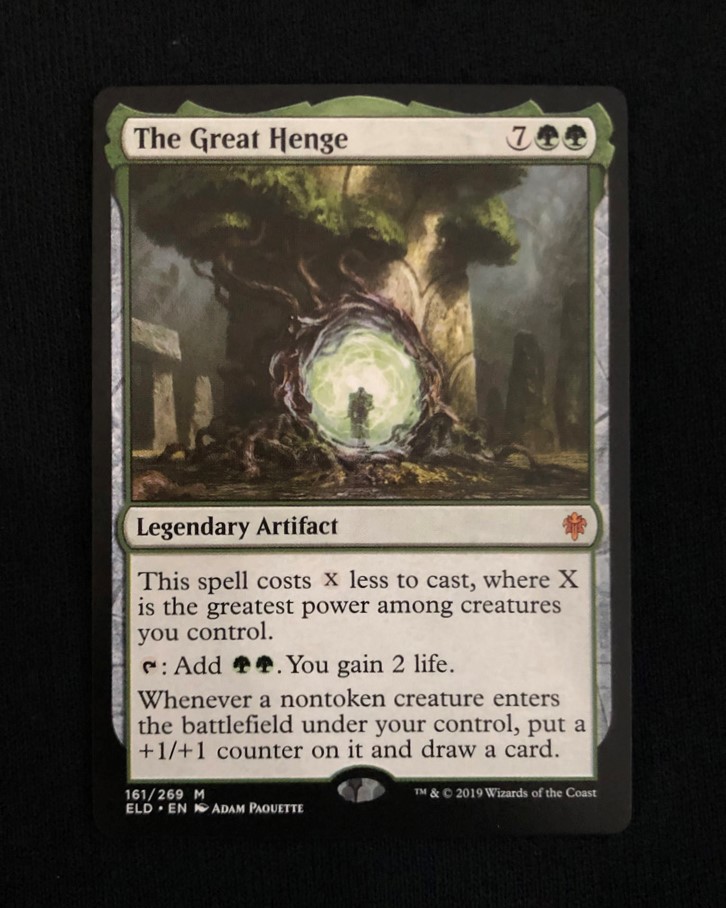
The card is the GOAT of certain decks. A mono green, or stompy deck will make the Great Henge broken.
If you can reduce it’s casting cost by five or seven it’s definitely worth dropping, simply because the abilities are so powerful. It lets you ramp, and get card draw advantage.
That said, it’s not a good card outside of those specific decks. It’s just too mana intensive to play. Plus artifacts are very susceptible to cheap removal.
The Workhorse 2-Mana Rocks (Yes, They’re Boring, That’s Why They’re Good)
Not every Commander deck needs to cosplay as a turn-two combo deck. If you’re building for high power but not full cEDH speed, the best ramp package is usually the reliable two-mana stuff:
- Talismans are great because they come down early, tap immediately, and the life loss is basically background noise in a 40-life format.
- Signets are slightly clunkier because you need an extra mana to turn them on, but the color fixing is real and they’re widely available.
- Mind Stone and Thought Vessel are excellent “honest Magic” rocks, with real utility when the game goes long.
If you want your deck to function every game, these are the vegetables. I’m sorry. Eat your vegetables.
How Many Mana Rocks Should You Run in Commander?
Mana rocks are crucial to Magic: The Gathering decks, especially in the Commander format, due to their ability to accelerate mana production, which is fundamental for casting spells and deploying strategies efficiently. In the Commander format, the importance of mana rocks is amplified due to the game’s structure, which involves a larger deck size (100 cards), a higher life total (40 points), and the potential for more varied and powerful spell casting compared to other formats.
Mana rocks serve several key roles in Commander decks:
- Acceleration: They allow players to ramp up their mana resources faster than what would be possible by relying on land drops alone. This acceleration is vital for executing strategies and casting high-cost spells earlier in the game.
- Color Fixing: Many Commander decks utilize multiple colors, making mana rocks invaluable for their ability to provide mana of any color. As a result, players are consistently free to cast spells of various colors without regard to their land base.
- Efficiency: Mana rocks can be more efficient in terms of deck space and mana cost. For example, they often come into play with a lower mana investment than lands that produce multiple colors of mana, and they can make the deck more resilient against land destruction strategies.
- Strategic Flexibility: Certain mana rocks offer additional benefits beyond mana production, such as card draw or the ability to tap for multiple mana of any color, adding layers of strategic depth and utility to a deck.
Given their importance, the selection and number of mana rocks in a Commander deck can significantly impact its performance. A balanced mix of mana rocks, along with other forms of mana acceleration and fixing, can provide a solid foundation for a deck’s mana base, supporting its overall strategy and increasing its competitiveness.
Conclusion
There you have it, folks. My picks for the best mana rocks for Commander. Let me know what you think. Did I miss some obvious ones? Do you think I am overestimating the power level of any of these? Leave a comment below.
Banned:
Mana Crypt:
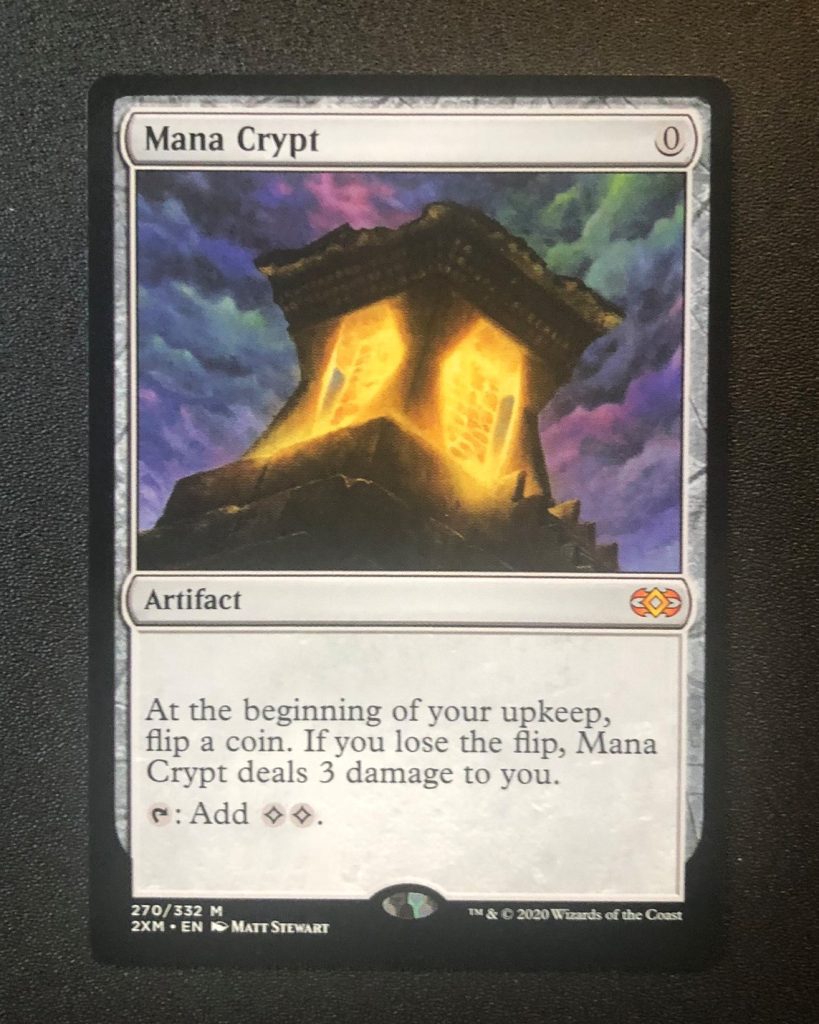
Mana Crypt is the poster child for “zero mana, two mana back, good luck everybody.” In a 40-life format, the damage drawback rarely mattered enough to keep it honest, and it created too many games where one player effectively skipped the early game.
It’s banned in Commander, so treat it as historical context, not deckbuilding advice. If you’re trying to recreate that speed in legal Commander, look at Mana Vault, Lotus Petal, Chrome Mox, and Mox Diamond instead.
Jeweled Lotus
Jeweled Lotus was the commander-only fast mana that made a lot of games feel like they started on turn three… except it was still turn one. If you’re reading older deck techs, you’ll still see it because it used to be a core part of turbo commander starts.
In Commander today, it’s banned. If what you wanted was “get my commander out way early,” the legal substitutes tend to be Mana Vault, Chrome Mox, Mox Diamond, and Lotus Petal, depending on your colors and game plan.
References
https://mtgcommander.net/index.php/banned-list/
https://magic.wizards.com/en/news/announcements/introducing-commander-brackets-beta