
TLDR
- Oswald Fiddlebender is strongest when built as an artifact pod deck, not a generic pile of shiny objects.
- The best Oswald Fiddlebender deck strategies are cEDH stax-combo, eggs value, scrap recursion, and casual toolbox.
- Your deck needs a clean mana-value ladder. If your 2-drop artifacts cannot become useful 3-drop artifacts, the tiny gnome has been given a warehouse with no inventory system.
- Proxies are best used for casual Commander, testing, and budget access where your group allows them. Sanctioned events still require authentic cards, with narrow judge-issued proxy exceptions.
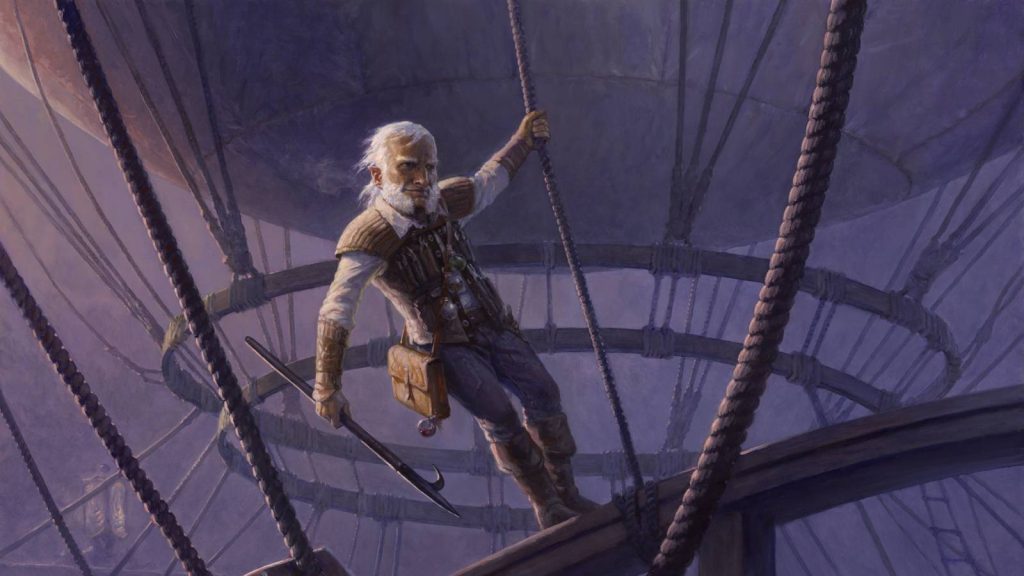
Oswald Fiddlebender looks like the kind of creature who should be repairing a kettle in a side room. In reality, he is a mono-white procurement department with a beard, and every artifact you sacrifice becomes a requisition form for the exact next piece of nonsense. Good Oswald Fiddlebender deck strategies start with one principle: you are not building “artifacts matter.” You are building a ladder.
Oswald is a 2-mana mono-white legendary creature whose activated ability lets you pay white mana, tap him, sacrifice an artifact, and search your library for an artifact card with mana value exactly one higher than the sacrificed artifact. That card goes directly onto the battlefield. The ability can only be activated as a sorcery, which is rude but probably fair. Without that line, someone would be tutoring combo pieces at the end of every opponent’s turn while pretending this is still a social activity.
What Makes Oswald Fiddlebender Deck Strategies Different?
Most artifact commanders reward volume. They want lots of artifacts entering, dying, tapping, untapping, or returning from the graveyard. Oswald is pickier. He does not care that you have “artifact synergy” in the abstract. He wants your deck arranged by mana value like a hardware store run by a goblin accountant.
That means every Oswald deck needs three things:
- Cheap artifacts to sacrifice.
- High-impact artifacts at each mana value.
- A clear plan for what each artifact chain is trying to accomplish.
The most important phrase on Oswald is “mana value equal to 1 plus.” If you sacrifice a 0-mana artifact, you find a 1-mana artifact. If you sacrifice a 2-mana artifact, you find a 3-mana artifact. Treasure, Clue, Food, and most non-copy artifact tokens usually have mana value 0, which makes them useful starting points for 1-mana tools like Sol Ring, Skullclamp, Sensei’s Divining Top, Pithing Needle, Esper Sentinel, or Soul-Guide Lantern.
The second most important phrase is “activate only as a sorcery.” Oswald is proactive. You do not hold him up like countermagic. You spend your turn building a line, protecting him, or choosing which annoying little artifact will become the next, larger annoying artifact.
The Oswald Mana-Value Ladder
A basic Oswald shell should be built around a ladder like this:
| Sacrifice This | Tutor This | Why It Matters |
|---|---|---|
| 0-mana artifact or token | 1-mana artifact | Starts the engine with Sol Ring, Skullclamp, Pithing Needle, Soul-Guide Lantern, Esper Sentinel, or Sensei’s Divining Top |
| 1-mana artifact | 2-mana artifact | Finds protection, tax pieces, ramp rocks, or setup cards like Lightning Greaves, Swiftfoot Boots, Arcane Signet, Mind Stone, or Ethersworn Canonist |
| 2-mana artifact | 3-mana artifact | Reaches combo and stax tools like Basalt Monolith, Rings of Brighthearth, Trinisphere, Crucible of Worlds, or Staff of Domination |
| 3-mana artifact | 4-mana artifact | Finds engines like The One Ring, Mystic Forge, Krark-Clan Ironworks, or Unwinding Clock |
| 4-mana artifact | 5-mana artifact | Gets finishers and heavy tools like Kuldotha Forgemaster, Portal-related effects if your list supports them, or large artifact creatures |
| 5+ mana artifact | Finishers | Closes through big artifact threats, infinite-mana outlets, or value engines that your table will describe as “a lot” while searching for removal |
Do not treat this table as a script you must follow every game. Treat it as a deckbuilding audit. If you have sixteen 2-mana artifacts and only three good 3-mana targets, Oswald will notice. He is small, not stupid.

Strategy 1: cEDH Stax-Combo Oswald
The sharpest Oswald decks play like mono-white artifact stax with deterministic combo lines. The goal is to slow opponents down with cards like Trinisphere, Thorn of Amethyst, Ethersworn Canonist, Grafdigger’s Cage, Torpor Orb, Drannith Magistrate, and similar hate pieces while using Oswald to assemble your own win.
This is the version for high-powered pods and cEDH tables. It is not the version to bring to a casual precon night unless your hobby is making strangers stare at their hands for forty minutes.
The classic combo shell uses Oswald to find pieces like Basalt Monolith and Rings of Brighthearth. Together, those cards can generate infinite colorless mana once the loop is set up. From there, Staff of Domination can draw through the deck, Walking Ballista can end the game, and Goblin Cannon can also function as a mana sink if you stack activations properly before it sacrifices itself.
Newer lists may also use Marvin, Murderous Mimic packages. Marvin can copy activated abilities from creatures you control, and Oswald happens to be a creature with a very good activated ability. Marvin lines often overlap with colorless combo pieces like Pili-Pala and Palladium Myr, creating infinite mana or extra pod-style activations. As usual, the exact line depends on your board state, your list, and how many players have wisely decided that Oswald must not be allowed to have hobbies.
Best for:
- cEDH or near-cEDH tables
- Players who like tight sequencing
- Metas where fast combo must be slowed down
- Players who enjoy winning through a spreadsheet with sleeves
Main tradeoff:
This version is repetitive. It is powerful because it finds the same types of cards consistently. If your group dislikes deterministic lines and stax pieces, this deck will be about as welcome as a smoke alarm with opinions.
Strategy 2: Eggs and Artifact Value
A high-power casual Oswald deck can skip the hard prison plan and focus on “eggs.” In MTG slang, eggs are cheap artifacts that replace themselves by drawing cards, searching lands, or producing value when they enter, leave, or get sacrificed.
Useful eggs and value pieces include Ichor Wellspring, Mycosynth Wellspring, Chromatic Star, Terrarion, Implement of Improvement, Spare Supplies, Prized Statue, Servo Schematic, and Solemn Simulacrum. These cards are excellent because sacrificing them to Oswald does not feel like a real cost. You cash them in, get a trigger or replacement card, then upgrade into the next artifact.
This shell usually wants engines like Mystic Forge, Unwinding Clock, Clock of Omens, Scrap Trawler, and The One Ring. If you are testing expensive engines before buying originals, ProxyKing has The One Ring MTG proxy available for casual play and deck testing where your group allows proxies.
The value version wins in a few ways. Sometimes it assembles Basalt Monolith plus Rings of Brighthearth. Sometimes it draws half the deck with artifact engines. Sometimes it just produces a board state so cluttered that opponents start reading every card twice, which is its own kind of pressure.
Best for:
- High-power casual Commander
- Artifact fans who want a real engine
- Pods that allow combos but dislike hard stax
- Players who enjoy turning one object into three objects and calling it “value”
Main tradeoff:
This version is slower than cEDH stax-combo. It also folds harder to mass artifact removal. If your local meta includes Vandalblast, Farewell, Bane of Progress, or the one person who proudly runs every hate card printed since 1998, bring recursion and emotional resilience.
Strategy 3: Scrap Recursion and Krark-Clan Ironworks Loops
The recursion build is for players who want Oswald to feel less like a tutor machine and more like a scrapyard with a win condition hiding behind a stack of invoices.
Key cards include Myr Retriever, Junk Diver, Scrap Trawler, Workshop Assistant, Krark-Clan Ironworks, Sevinne’s Reclamation, Brought Back, and Second Sunrise-style effects if your build supports them. The plan is simple in theory: sacrifice artifacts, get value, recur artifacts, repeat until the table realizes the “graveyard deck” is somehow still mono-white artifacts.
Scrap Trawler is especially important because it rewards artifacts going to the graveyard by returning cheaper artifact cards. Krark-Clan Ironworks turns artifacts into mana. Together with enough recursion and the right mana values, these cards can generate loops that create mana, draw cards, or rebuild your board repeatedly.
This strategy can be tuned up or down. A casual version can use recursion for steady value and artifact beatdown. A sharper version can build toward deterministic loops with Staff of Domination, Walking Ballista, or another mana outlet.
Best for:
- Players who like graveyard recursion
- Mid-power to high-power pods
- Tables that allow combos but expect them to take some setup
- People who think “sacrifice this pile, return that pile” is a sentence and not a cry for help
Main tradeoff:
Graveyard hate matters. Soul-Guide Lantern, Rest in Peace, Dauthi Voidwalker, and similar effects can make your fancy recursion loop look like a garage sale after a rainstorm. If your meta runs heavy graveyard hate, do not make recursion your only plan.
Strategy 4: Casual Toolbox Oswald
Casual Oswald is at his best when you lean into toolbox play instead of forcing a cEDH list through a budget filter. A budget imitation of a high-power list often becomes a drawer full of almost-screwdrivers. Functional, technically, but nobody is proud.
A casual toolbox build should run silver bullets that answer common situations:
- Graveyard decks: Soul-Guide Lantern, Relic of Progenitus, Tormod’s Crypt
- Activated abilities: Pithing Needle, Sorcerous Spyglass
- Spell-heavy decks: Damping Sphere, Thorn of Amethyst
- Creature-heavy decks: Ensnaring Bridge, Caltrops, or other defensive artifacts depending on your meta
- Combo decks: Grafdigger’s Cage, Torpor Orb, Trinisphere
- Commander protection: Lightning Greaves, Swiftfoot Boots, Darksteel Plate
- Fair pressure: Nettlecyst, Kaldra Compleat, Bronze Guardian, constructs from Urza’s Saga
This version can still win with combo, but it does not have to. Urza’s Saga can create large Construct tokens and find cheap artifacts. Nettlecyst can turn any random creature into a real clock. Kaldra Compleat can end games if opponents have spent all their removal on your engines.
Best for:
- Casual Commander nights
- Budget-conscious players
- Unknown metas
- Players who want Oswald to feel like a problem solver, not a tiny parole violation
Main tradeoff:
Toolbox decks can draw the wrong half. If you fill the deck with narrow answers but no card advantage, you will eventually sit there holding the perfect answer to a deck nobody brought. Keep your silver bullets useful, not cute.
Protection and Untap Effects Are Not Optional
Oswald has a tap ability. That means he must survive, untap, and continue doing his little manufacturing crimes. If he dies twice, commander tax starts to matter. If he dies three times, you are now playing a mono-white artifact deck without the card that justified half your deckbuilding decisions. Thrilling, in the way a flat tire is thrilling.
Protection should start with Lightning Greaves and Swiftfoot Boots. Darksteel Plate is slower but useful. Mother of Runes and Giver of Runes are not artifacts, but they protect Oswald well enough to deserve consideration in many builds.
Untap effects can turn Oswald from “one tutor per turn” into “why are you still searching your library?” Thousand-Year Elixir is one of the best because it lets Oswald activate sooner and untap again. Magewright’s Stone and Patriar’s Seal also help. Staff of Domination becomes both a combo payoff and a utility piece when the mana is available.
Do not overload on untap effects without enough good artifacts to find. Untapping Oswald twice is only impressive if the second activation does something besides prove that you can shuffle your deck with confidence.
Which Oswald Build Should You Choose?
Use this quick framework:
| Your Meta | Best Oswald Build | Why |
|---|---|---|
| cEDH or very high power | Stax-combo | You need speed, disruption, and deterministic wins |
| High-power casual | Eggs value | You generate cards and mana without hard-locking the table |
| Mid-power combo-friendly | Scrap recursion | You get resilient value and combo lines without max-speed stax |
| Casual unknown pods | Toolbox | You answer more situations and avoid being “that player” immediately |
| Budget groups | Toolbox or eggs | You can build a functional shell without copying every expensive staple |
In my opinion, eggs value is the best starting point for most players. It teaches the Oswald mana-value ladder, gives you real game actions, and does not immediately turn every pod into a rules seminar. From there, you can tune upward into stax-combo or sideways into recursion.
Proxy and Rule 0 Advice for Oswald Decks
Oswald decks often use expensive artifacts, old combo pieces, and narrow staples that may not make sense to buy before testing. That makes proxies useful for casual Commander, playtesting, budget access, and protecting valuable originals. It does not make proxies legal everywhere. Sanctioned events require authentic Magic cards, with only narrow judge-issued proxy exceptions under tournament policy.
Before you bring a proxied Oswald list to a store or unfamiliar pod, read ProxyKing’s guide on using MTG proxies at FNM or tournaments. The short version: ask first, be clear, and do not represent playtest cards as authentic cards. The world has enough avoidable judge calls already.
A simple Rule 0 script:
“Quick heads up, this is an Oswald artifact deck using proxies for casual testing. It can assemble artifact combos, but I can play a slower version if that power level is too high. Are proxies and combo lines okay tonight?”
That script solves more problems than a fifteen-minute ethics monologue. Nobody came to Commander night hoping for a deposition.
Final Recommendation
The strongest Oswald Fiddlebender deck strategies all start with structure. Build the mana-value ladder first, then choose your shell. If you want maximum power, play stax-combo. If you want strong games without locking everyone under a filing cabinet, play eggs value. If you like loops and graveyard recursion, build scrap recursion. If your table is more casual, build toolbox Oswald and let the gnome solve problems one artifact at a time.
Oswald rewards planning. He punishes sloppy curves. And if you build him correctly, every random artifact token becomes the first rung on a ladder your opponents should have kicked over two turns ago.
FAQs
Is Oswald Fiddlebender good in MTG Commander?
Yes. Oswald Fiddlebender is a strong Commander because he tutors artifacts directly from the command zone. His power depends on how carefully the deck’s mana-value curve is built. A random artifact pile will underperform. A planned artifact pod shell can be extremely consistent.
What is the best Oswald Fiddlebender deck strategy?
For maximum power, the best strategy is stax-combo. For most casual and high-power casual pods, eggs value is usually the better starting point because it creates strong games without relying as heavily on hard locks.
Can Oswald sacrifice Treasure, Clue, or Food tokens?
Yes. Oswald can sacrifice artifact tokens. Most artifact tokens have mana value 0, so sacrificing one to Oswald lets you search for a 1-mana artifact card and put it onto the battlefield.
How many artifacts should an Oswald deck run?
Most Oswald decks want a very high artifact count, often 40 or more, depending on the build. The exact number matters less than the distribution. You need enough artifacts at 0, 1, 2, 3, and 4 mana value so Oswald always has useful chains.
Is Oswald better as combo or value?
Oswald is strongest as combo, but value builds are often more enjoyable for casual tables. Combo uses his tutoring consistency to win quickly. Value uses the same consistency to generate cards, mana, protection, and board presence over several turns.
Are Oswald Fiddlebender proxies allowed in Commander?
In casual Commander, proxies are a playgroup or store decision. Many groups allow proxies for testing, budget, or accessibility, but you should ask first. In sanctioned events, player-created proxies are not legal, with limited judge-issued exceptions for specific tournament situations.
References
- Wizards Gatherer: Oswald Fiddlebender
- Scryfall: Oswald Fiddlebender
- Wizards of the Coast: Magic Tournament Rules
- Wizards of the Coast: On Proxies, Policy, and Communication
- Commander Spellbook: Rings of Brighthearth and Basalt Monolith
- Commander Spellbook: Combos with Marvin, Murderous Mimic
- EDHREC: Cut-Rate Commander, Oswald Fiddlebender Artifact Pod
- ProxyKing: Can You Use MTG Proxies at FNM or Tournaments?
- ProxyKing: Proxy Use Policy