
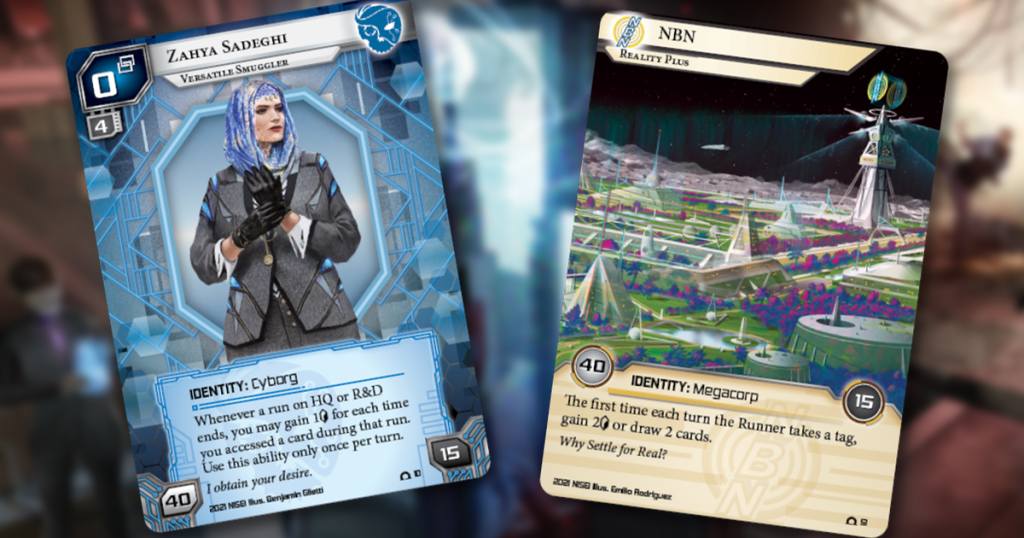
If you hang out around card game people long enough, you’ll hear the same two names over and over: Netrunner and Magic: The Gathering. Both are smart, tactical games with strong communities and long histories. But they feel very different at the table.
Since ProxyKing lives in the Magic world, I’m going to talk from that angle: what it’s like to come from MTG and step into Netrunner, how the two games compare, and which one might be better for you.
Theme and Setting: Cyberpunk Heists vs Fantasy Spellcasting
Magic is classic fantasy. You’re a planeswalker, slinging spells, summoning creatures, and using the five-color mana system to build your strategy. Every card is another piece of that world: dragons, angels, goblins, and everything in between.
Netrunner is tight cyberpunk. One player is a mega-corporation, sitting behind servers full of secret “agendas.” The other is a hacker (the “runner”) trying to break in, steal data, and expose the corp. The whole game is about high-risk runs, bluffing, and psychological pressure. You’re not summoning monsters; you’re poking at a stack of facedown cards, asking “Is that a trap or a jackpot?”
If you want broad, open-ended fantasy and wild creature designs, Magic wins. If you like sharp, near-future hacking vibes with a bit of Blade Runner energy, Netrunner hits harder.
Core Gameplay: Symmetric Duel vs Asymmetric Mind Game
This is the biggest difference.
Magic is symmetric. Both players use the same rules, draw from similar types of cards, and win in similar ways (mostly by dropping your opponent from 20 life to 0, with some poison / combo exceptions). Your decks might be very different, but the structure of the game is shared.
Netrunner is fully asymmetric.
- One player is Corp: they install servers, put face-down cards in them, and protect them with ICE (defensive programs). They try to advance agendas to score points.
- One player is Runner: they install rigs, make runs on those servers, and try to steal those agendas before the corp can score them.
Each side has its own card types, its own economy tricks, and its own win conditions, and you never shuffle Corp and Runner cards together in the same deck.
At the table this means:
- Magic feels like a tug-of-war over the battlefield.
- Netrunner feels like a cat-and-mouse hacking duel, full of hidden information, bluffs, and “do I risk this run right now or not?”
If you like the idea of one game teaching you two very different roles to master, Netrunner is great. If you want both players on equal footing, sharing the same rules, Magic is simpler to live with.
Turn Structure and Tension
Magic has a clear turn structure: untap, upkeep, draw, main phases, combat, end step. You tap lands for mana, cast spells, and attack. The rules are deep, but the rhythm becomes second nature pretty quickly.
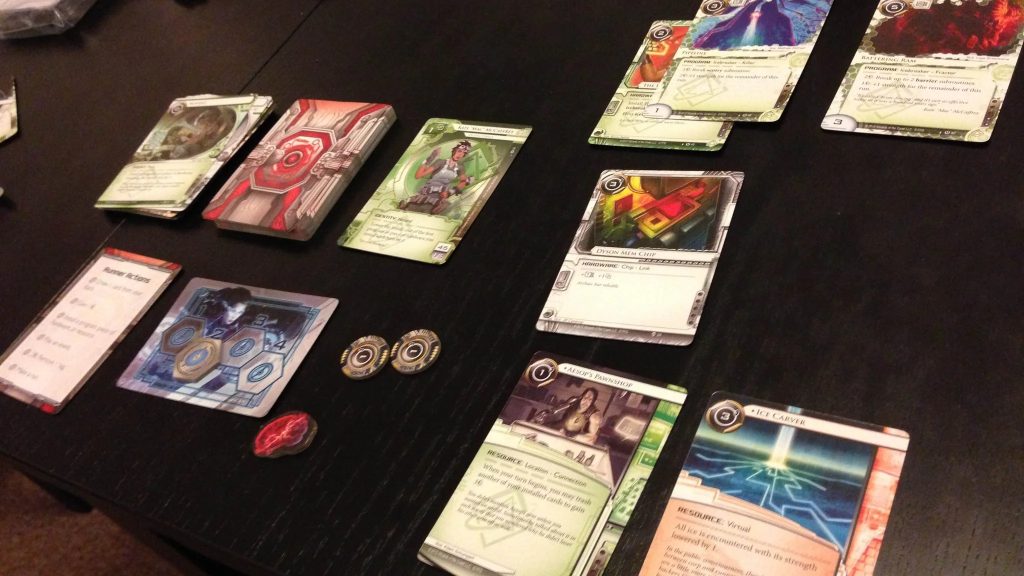
Netrunner has a more open “action point” system. Each turn you get a set number of clicks (actions). You can use them to:
- Gain credits
- Draw cards
- Install programs or ICE
- Make runs on servers
Because everything is face down on the corp side, every run is a small gamble. The corp might be broke, and you can safely poke their R&D. Or they might be sitting on a nasty trap that punishes your curiosity.
Magic’s tension comes from combat math and instant-speed tricks. Netrunner’s tension comes from hidden cards and bluffing. You stare at a facedown server and decide whether you’re brave or careful this turn.
Deck Building and Card Pools
Here’s where format and card philosophy matter.
Magic is a collectible card game (CCG). Cards come in randomized booster packs, with rotating formats like Standard and eternal formats like Commander and Modern. Deck building involves managing color requirements, mana curves, and synergy between cards. You also deal with “mana screw” and “mana flood” because lands and spells share the same deck.
Netrunner started as a CCG in the 90s, but the modern version most people talk about, Android: Netrunner, was a Living Card Game (LCG). That means fixed packs: no random boosters, and you know exactly which cards you get in each release. Decks are built within a faction ID, influence limits, and certain card limits, but there’s no mana system in the Magic sense. Instead, you manage credits (money) and clicks (actions) as your resources.
From a proxy / budget angle:
- Magic’s card pool is enormous, powerful cards can be expensive, and proxying is a common way to test decks, build cubes, or play high-end formats without selling your car.
- Netrunner’s LCG model made full playsets relatively affordable when it was in print. Even now, the community-driven version maintained by Null Signal Games keeps new sets coming and supports print-and-play or POD-style access.
If you like tinkering with large, wild card pools and building multiple decks in different formats, Magic gives you endless space. If you prefer a tight, curated meta where each card release is carefully balanced, Netrunner feels more contained.
Business Model and Availability
Magic is a massive commercial machine. New sets drop constantly, there are premium versions, crossovers, and a very active secondary market with real money attached.
Netrunner’s story is much messier. The original WotC CCG died. Android: Netrunner from Fantasy Flight Games launched as an LCG, built a strong following, then had its license discontinued. The community stepped in under the NISEI banner, later rebranding to Null Signal Games, and they still design and release new, non-profit Netrunner sets with their own rotation and organized play.
Practically, that means:
- Magic is easy to buy anywhere, but staying “current” in some formats can be expensive.
- Netrunner is more niche. You’ll often be printing community card files, buying from smaller printers, or hunting down old boxes if you want official FFG-era product.
For a site like ProxyKing, that difference matters. Magic proxies usually replace expensive singles. Netrunner “proxies” are often how you get physical copies of community-legal cards in the first place.
Competitive Scene and Community Feel
Magic has a huge competitive ecosystem: local game stores, regional events, large tournaments, and online play through Arena and MTGO. Formats like Standard, Pioneer, Modern, Legacy, and Commander each have their own meta and culture.
Netrunner is smaller but very passionate. Null Signal runs world championships, maintains ban and restricted lists, and supports community events. The vibe is more “tight-knit hacker club” than “global esports circuit,” but people take the game seriously and keep pushing the meta.
If you like big events, tons of content, and always having someone to play with online, Magic is king. If you like smaller, very dedicated communities where everyone is there because they really love this one game, Netrunner feels special.
So Which One Should You Play?
If you already love Magic, Netrunner is not a replacement. It’s a different tool in the same toolbox.
Pick Magic if you want:
- Huge variety of formats and decks
- Easy access to cards and opponents
- A flexible game you can play casually, competitively, or as a social hang
- Tons of use out of high-quality proxies, cubes, and custom prints
Pick Netrunner if you want:
- A sharp, asymmetric, two-player mind game
- Strong theme baked into the mechanics
- A curated card pool with fixed expansions
- A community that’s small but extremely engaged
Honestly, plenty of players end up with both: Magic for broad play and social nights, Netrunner for intense one-on-one sessions where every click and credit matters.
Whichever way you go, both games reward you for learning, tweaking decks, and shuffling up again. And if you’re in the Magic camp but curious about trying new ideas or formats without buying into every set, that’s where good proxies and high-quality prints can carry a lot of weight.
References
- Overview of Magic: The Gathering, game structure, and fantasy theme. Wikipedia
- Official Magic formats overview, including Standard, Modern, and casual formats like Commander. Wizards
- Android: Netrunner official description as a two-player, asymmetric Living Card Game in a cyberpunk setting. Fantasy Flight Games
- Null Signal Games and the community continuation of Netrunner after Fantasy Flight support ended. Null Signal Games