
MTG Eternalize Strategy Guide: Best Ways to Use Eternalize in Magic: The Gathering
TLDR
- Eternalize is best used as a late-game value engine, not as your whole deck’s personality. Graveyard decks already have enough going on.
- The strongest MTG Eternalize strategy is to use creatures with enter-the-battlefield abilities, power-scaling effects, or combat abilities that become much scarier on a 4/4 body.
- Eternalize pairs well with discard, self-mill, token doublers, Zombie synergies, and board wipes.
- The main weakness is graveyard hate. Rest in Peace, Farewell, Leyline of the Void, and similar effects make Eternalize decks look very silly, very quickly.
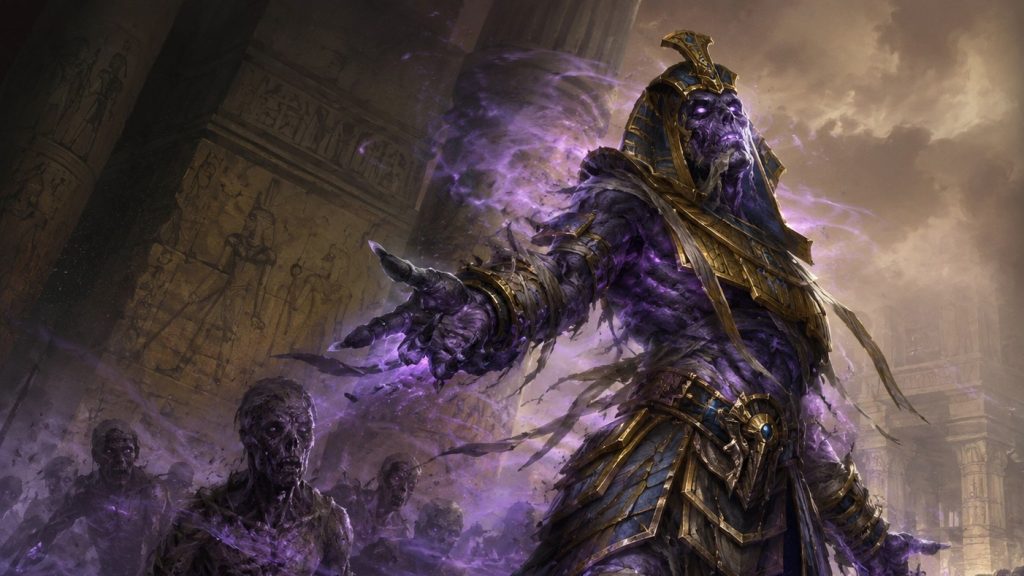
Eternalize is one of those Magic: The Gathering mechanics that looks simple until you realize it quietly asks you to build your deck, manage your graveyard, plan your mana, dodge exile effects, and remember token rules. So yes, completely normal Magic stuff. A good MTG Eternalize strategy treats the mechanic as built-in late-game pressure: your creature does its job once, dies, then comes back as a 4/4 black Zombie token with the same printed abilities.
That second life is the whole point. Eternalize gives you more mileage out of cards you were already willing to play, which is exactly where graveyard mechanics should live. Not as a fragile house of combo cards. Not as a shrine to your own cleverness. Just efficient, annoying, repeatable value.
What Eternalize Actually Does
Eternalize is an activated ability that works from the graveyard. When you could cast a sorcery, you can pay the Eternalize cost, exile the creature card from your graveyard, and create a token copy of it.
That token copy has a few important changes:
| Eternalized token trait | What changes |
|---|---|
| Power and toughness | It is always 4/4 |
| Color | It becomes black |
| Creature type | It becomes a Zombie in addition to its other types |
| Mana cost | It has no mana cost |
| Mana value | Usually 0, because it has no mana cost |
| Abilities | It keeps the original card’s printed rules text |
The “keeps the rules text” part is where the mechanic becomes interesting. A 4/4 vanilla creature is fine. A 4/4 creature that draws four cards, returns a card from your graveyard, attacks with double strike, or pumps another creature is much better. We like our undead cardboard to contribute. Standards matter.
Eternalize is not casting a spell, so normal counterspells that say “counter target spell” do not stop the activation. Stifle-style effects that counter activated abilities can still interact with it, but your average Counterspell is going to sit there, looking professional and doing nothing.
MTG Eternalize Strategy Starts With the Right Creatures
The most common mistake is treating every Eternalize card like it belongs in the same deck. It does not. Eternalize cards vary a lot in quality because some creatures become dramatically better as 4/4s, while others mostly become more expensive versions of themselves.
The best Eternalize cards usually fall into one of three buckets:
| Card type | Why it works with Eternalize | Examples |
|---|---|---|
| ETB value creatures | You get the effect once when cast and again when Eternalized | Champion of Wits, Timeless Witness |
| Combat scaling creatures | A 4/4 body makes the printed combat ability much better | Adorned Pouncer, Earthshaker Khenra |
| Graveyard or discard enablers | They help put Eternalize cards where you want them | Faithless Looting, Stitcher’s Supplier, Grisly Salvage |
The cards you want most are the ones where the 4/4 body matters. Champion of Wits is the poster child because its ability cares about its power. As a normal creature, it can draw two and discard two. As an Eternalized 4/4, it can draw four and discard two. That is not subtle. That is the card equivalent of showing your work in pen.
Adorned Pouncer is another clean example. A 1/1 double striker is cute. A 4/4 double striker is a real threat that hits for eight damage before buffs. If your opponent has no answer, the game can end quickly. Eternalize is not always about grinding. Sometimes the mummy cat just starts doing combat math with a knife.
Use Eternalize as a Mana Sink
Eternalize costs tend to be expensive. That is not a bug. It is the price of getting a second creature without spending a card from your hand.
This makes Eternalize best in midrange, control, and Commander decks that expect the game to go long. If your plan is to win on turn four, Eternalize is probably not helping. It is still waiting politely in the graveyard, holding a seven-mana receipt.
The best use pattern is simple:
- Cast the creature normally when it is useful.
- Trade it off, discard it, mill it, or let it die.
- Use your late-game mana to Eternalize it.
- Force your opponent to answer the same card again, except now it is bigger and somehow even more annoying.
That is the grindy dream. You turn dead cards into threats while keeping your hand available for interaction. In Commander, this is especially useful because games often reach the point where everyone has mana, nobody has enough cards, and someone is pretending they are not about to cast Cyclonic Rift.
Discard and Self-Mill Make Eternalize Faster
You do not always need to cast Eternalize creatures first. Sometimes the best line is to put them straight into the graveyard and activate them later.
Discard effects are excellent here. Faithless Looting, Frantic Search, Consider, Tainted Indulgence, and similar cards help you move expensive Eternalize creatures out of your hand and into the zone where they matter. Self-mill cards like Stitcher’s Supplier, Grisly Salvage, Satyr Wayfinder, and Commune with the Gods can do the same job while also fueling broader graveyard synergies.
The key is not to overbuild. A deck with 14 self-mill cards and three actual Eternalize payoffs is not a strategy. It is a cry for help in decklist form.
A good rule of thumb:
| Deck style | Eternalize enablers you want |
|---|---|
| Light Eternalize package | 3 to 6 discard or self-mill effects |
| Graveyard midrange | 7 to 10 enablers |
| Dedicated Commander graveyard deck | 10 or more, plus recursion and protection |
If Eternalize is only a small value package, do not jam your deck full of graveyard setup cards. Your cards still need to function when the graveyard gets exiled, because it will. Someone at the table always brought Rest in Peace. They look innocent. They are not.
Token Synergies Are Excellent
Eternalize creates tokens, which opens up another category of payoffs. Anointed Procession, Mondrak, Glory Dominus, Parallel Lives, and Doubling Season can turn one Eternalize activation into multiple 4/4 Zombie copies.
This gets especially silly with ETB creatures. Eternalizing Champion of Wits with a token doubler can create two 4/4 tokens, each drawing four and discarding two. Eternalizing Timeless Witness with a token doubler can return multiple cards from your graveyard. This is the good kind of nonsense. The rules kind, not the “we need a judge and a group therapist” kind.
Token commanders also make Eternalize more threatening. Temmet, Vizier of Naktamun is a natural fit because he rewards token creatures and can make one harder to block. The Scarab God is not technically an Eternalize card, but it creates 4/4 black Zombie copies from graveyards, which makes it functionally adjacent. Close enough for strategy discussion, not close enough for rules pedantry. Everyone wins, briefly.
Zombie Synergies Are Real, But Do Not Force Them
Eternalized creatures become Zombies in addition to their other types. That means they work with Zombie lords, Zombie token payoffs, and cards that care about Zombie creatures entering or attacking.
Useful Zombie-adjacent payoffs include cards like Death Baron, Lord of the Accursed, Diregraf Captain, Wilhelt, the Rotcleaver, and The Scarab God. The exact package depends on your colors.
The trap is assuming Eternalize must be a Zombie tribal deck. It does not. Champion of Wits is still good because it draws cards. Timeless Witness is still good because it returns any card from your graveyard. The Zombie type is upside, not homework.
In Commander, Zombie synergies are strongest when your deck already wants them. If your commander rewards Zombies, Eternalize creatures are easy includes. If your deck has no other Zombie support, do not add three Zombie lords just because two of your creatures might return as Zombies sometime around turn eight. That is how decks become garages full of abandoned subthemes.
Eternalize Loves Board Wipes
One of the best things about Eternalize is how well it plays after a board wipe. If your opponent casts Wrath of God, Damnation, Supreme Verdict, or Blasphemous Act, your Eternalize cards in the graveyard become a rebuilding plan.
This is why Eternalize is strong in control shells. You can spend the early game trading resources, sweep the board, then use Eternalize to create threats without spending cards from your hand. That is efficient. Also rude. But mostly efficient.
The same logic applies in Commander. After a wipe, Eternalize gives you something productive to do with mana while everyone else complains about how the board wipe was “too early.” It was turn nine. They will survive emotionally.
Watch Out for Graveyard Hate
Eternalize has one obvious weakness: it needs the card to stay in your graveyard. If the card is exiled before you can activate the ability, there is no second life.
The most dangerous hate cards include:
| Hate card | Why it hurts |
|---|---|
| Rest in Peace | Exiles graveyards and stops future graveyard use |
| Leyline of the Void | Exiles opposing cards before they hit the graveyard |
| Farewell | Can exile all graveyards and all creatures |
| Soul-Guide Lantern | Cheap, flexible graveyard removal |
| Bojuka Bog | Land slot graveyard hate, because apparently lands needed opinions |
| Scavenging Ooze | Picks off key creatures one at a time |
Your response depends on your colors. Blue can protect key turns with counterspells. Green and white can remove enchantments. Black can use discard to clear hate pieces before they land. Red mostly has to pressure the opponent and pretend everything is fine, which is very on-brand.
Best Eternalize Cards to Build Around
Here are the Eternalize cards and Eternalize-adjacent cards most worth considering.
| Card | Best use |
|---|---|
| Champion of Wits | Card selection early, huge draw effect later |
| Timeless Witness | Graveyard recursion with a second 4/4 body |
| Adorned Pouncer | Aggressive double strike finisher |
| Earthshaker Khenra | Aggro pressure and late-game evasion support |
| Sunscourge Champion | Life gain and grindy creature value |
| Resilient Khenra | Pump effect early, larger pump body later |
| Dreamstealer | Discard pressure that becomes more threatening as a 4/4 |
| The Scarab God | Eternalize-like graveyard payoff for Zombie decks |
| God-Pharaoh’s Gift | Turns graveyard creatures into 4/4 Zombie-like threats |
| Hour of Eternity | Big graveyard conversion spell for creature-heavy decks |
Champion of Wits and Timeless Witness are the best pure value cards. Adorned Pouncer and Earthshaker Khenra are better if you are aggressive. The Scarab God and God-Pharaoh’s Gift are the bigger build-arounds, especially if you want the Eternalize feel without being limited to the small actual Eternalize card pool.
Eternalize in Commander
Commander is probably the best home for Eternalize because the format gives you time, mana, and access to token and graveyard synergies.
The best Commander shells include:
- Esper tokens with Temmet-style support
- Dimir or Grixis Zombie decks
- Sultai graveyard value
- Abzan recursion and token doubling
- Azorius or Bant blink-adjacent value decks that also use graveyard recursion
Eternalize does not need to be your commander’s whole plan. In fact, it is usually better as a package. Play the best cards, support them naturally, and let them create value when the game goes long.
For casual testing, proxies are useful when you are trying different versions of graveyard and token packages before buying expensive staples. ProxyKing has a practical guide on proxying a whole MTG deck responsibly, and the Print MTG Proxies page is useful if you want full-deck testing copies for kitchen table games, cubes, or Commander tuning.
Use proxies cleanly: tell your group, keep cards readable, and do not use playtest cards in sanctioned events. Sanctioned Magic requires authentic cards, with narrow judge-issued proxy exceptions for cards damaged during an event. Yes, the distinction matters. Yes, someone online will argue about it anyway.
Eternalize vs Embalm
Eternalize is basically Embalm with a gym membership and worse morals.
| Feature | Embalm | Eternalize |
|---|---|---|
| Zone used | Graveyard | Graveyard |
| Timing | Sorcery speed | Sorcery speed |
| Cost | Activated ability cost | Activated ability cost |
| Token size | Same as original | Always 4/4 |
| Token color | White | Black |
| Token type | Zombie plus other types | Zombie plus other types |
| Best use | Reusing small value creatures | Upgrading creatures into bigger late-game threats |
The strategic difference is simple: Embalm gives you another copy. Eternalize gives you a larger, more threatening copy. That means Eternalize is better when the 4/4 body changes combat or improves the creature’s abilities.
Final Verdict
The best MTG Eternalize strategy is to treat Eternalize as late-game card advantage stapled to creatures you already want to play. Prioritize ETB effects, power-scaling abilities, combat keywords, discard outlets, self-mill, and token synergies. Do not build a deck that folds to one Bojuka Bog unless your hobby is learning the same lesson repeatedly.
Eternalize is strongest when it gives your deck inevitability. Cast your creatures. Let them trade. Fill the graveyard. Then turn your old resources into 4/4 Zombie tokens and make your opponent answer them again.
That is the dream: value, pressure, and just enough graveyard nonsense to make everyone check whether Farewell is in their hand.
FAQs
Is Eternalize the same as reanimation?
No. Eternalize does not return the original card to the battlefield. It exiles the card from your graveyard and creates a token copy with specific changes. That token is black, 4/4, has no mana cost, and is a Zombie in addition to its other types.
Can Eternalize be countered?
Eternalize is an activated ability, not a spell. A normal Counterspell cannot stop it. However, cards that counter activated abilities, such as Stifle-style effects, can interact with it.
Does an Eternalized token keep the original card’s abilities?
Yes. The token keeps the copied card’s rules text and abilities, except for the changes made by Eternalize. This is why cards like Champion of Wits and Adorned Pouncer are much stronger when Eternalized.
What happens if an Eternalized token dies?
It goes to the graveyard briefly, then ceases to exist as a state-based action. It does not stay in the graveyard, and you cannot Eternalize it again.
What are the best Eternalize cards?
Champion of Wits, Timeless Witness, Adorned Pouncer, Earthshaker Khenra, and Sunscourge Champion are among the most useful Eternalize cards. The Scarab God and God-Pharaoh’s Gift are also strong Eternalize-adjacent cards.
Are Eternalize tokens good with Zombie tribal?
Yes, but Zombie tribal should be treated as upside unless your deck is already built around Zombies. Eternalize tokens are Zombies, so they work with Zombie lords and Zombie payoffs.
References
- Wizards of the Coast, Hour of Devastation Mechanics
- Magic Comprehensive Rules, Eternalize rule 702.129
- Draftsim, Eternalize in MTG: Rules, History, and Best Cards
- Card Kingdom Blog, Eternalize, MTG Keywords Explained
- Scryfall, Oracle search for Eternalize
- CoolStuffInc, Mechanics of Magic Overview: Eternalize
- Wizards of the Coast, On Proxies, Policy, and Communication
- Magic Tournament Rules, Proxy Cards section 3.4
Share this Post
Product Categories
- Lorcana3535 products
- MTG Proxy Cards23032303 products
- MTG Proxy Sets2323 products
- Artifact351351 products
- Black310310 products
- Blue261261 products
- Colorless6666 products
- Green283283 products
- Land MTG Proxy Cards444444 products
- Multi-Colored202202 products
- Red176176 products
- White212212 products
- Pokemon2626 products
Recent Posts
- Protection From a Color in MTG: Damage, Enchanting, Blocking, and Targeting
- ProxyKing Customer Service: What Our Hands-On Testing Says About the Current Operation
- Best Expensive Counterspells to Proxy for High-Power Commander Testing
- How to Proxy Reserved List Cards for a Cube Without Rebuilding the Whole Cube
- Best Fetch Lands to Proxy for Commander and Multi-Deck Testing