
How Popular Is Lorcana in 2026? A Reality Check
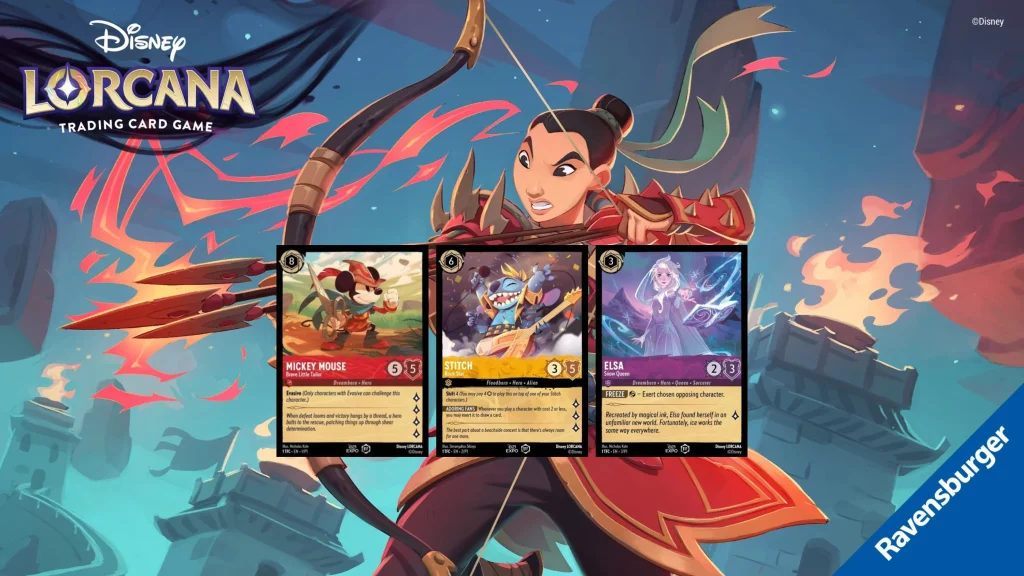
If you’re asking how popular is Lorcana, you’re probably trying to figure out one thing: is this game still “a thing” after the early chaos, sellouts, and collector frenzy. Fair question. A lot of new TCGs burn hot for six months and then vanish into the same box as your half-built model kits.
In 2026, Disney Lorcana sits in a more normal place. The hype phase cooled, but the game didn’t evaporate. There’s still organized play, set releases keep coming, the singles market still moves, and stores are still running events. The short version: how popular is Lorcana depends on what signal you care about (players, product, or prices), and Lorcana still shows up on all three.
How popular is Lorcana in 2026? Here’s the scorecard
There isn’t one perfect “popularity meter” for a TCG. So i look at a handful of boring-but-useful signals instead:
| Popularity signal | What it tells you | 2026 snapshot |
|---|---|---|
| Publisher sales and print volume | Is the game still financially real? | Sales cooled vs peak hype, but the publisher still describes it as a long-term pillar and kept pushing new releases |
| Large event participation | Do people travel for it? | Multiple events have pulled “big room” player counts, not just 40-person locals |
| Organized play structure | Is there a steady on-ramp? | Stores have league-style play plus bigger competitive tracks |
| Singles market movement | Are cards actually getting bought and sold? | Price spikes still happen, especially around new metas and collector chase cards |
| Release cadence | Is new product consistent? | New sets keep landing, with 2026 roadmap energy (Winterspell and more) |
None of this means Lorcana is “bigger than Pokémon” or “the next Magic.” But if you want proof it’s not a dying side project, these signals are the proof.
Sales and supply: the peak hype ended, the demand stayed
The cleanest modern story is this: Lorcana exploded early, then normalized.
Ravensburger publicly framed 2025 as a step down from the initial frenzy, while still calling Lorcana a sustainable, long-term part of their portfolio. They also described the “investment-first” crowd as fading out while players and collectors stayed in. That’s actually a healthy shift. When the only thing propping up a TCG is flippers and panic buying, it’s not “popular,” it’s just scarce.
What you want to see is boring demand: people buying packs because they play, people buying singles because they’re building decks, and stores running leagues because seats keep filling. Lorcana still shows those signs, even after the early wave cooled off.
The competitive scene is real, and it brought people with it
One of the best popularity tells is whether a game can support a circuit. Lorcana did.
The official Disney Lorcana Challenge program published a Year One retrospective that included big participation numbers across the season. That kind of “we tracked games played and players involved” post is not something you write for a hobby that’s quietly limping along.
Also, the existence of real balancing decisions is its own signal. Lorcana’s first competitive bans happened in 2025. That’s not a victory lap, but it’s a sign the game hit the point where metagames matter and organizers care about long-term health. Dead card games don’t need bans. Nobody’s sweating the meta in a game with six players left.
And beyond the official circuit, third-party tournament ecosystems have popped up too. When you see independent organizers putting up serious prize pools and building qualifier structures, that usually means the player base is large enough to support it.
Big events pull big numbers (which is hard to fake)
“Popular” in TCG land means people show up in person. Online chatter is cheap. Plane tickets are not.
Lorcana Challenge events have posted player counts in the high hundreds to the low thousands, depending on location. That matters because hitting 1,000+ entrants is a logistics problem, not a vibes problem. You need judges, space, and a reason for people to care.
If you’ve ever been to a big Magic Open, it’s the same feeling: lines, deck checks, side events, and that one person who clearly hasn’t had water in 48 hours. Large events don’t happen consistently unless the game has real legs.
The World Championship existed, and people watched it
A lot of games talk about “worlds” early. Fewer games actually run it.
Lorcana ran a World Championship in 2025 and promoted official streaming around it. Again, this isn’t a guaranteed “Lorcana is massive forever” stamp, but it’s a real marker of maturity. If a game is collapsing, you don’t spend energy building a broadcast moment.
The collector market is still awake (price movement is a clue)
If you want another clean signal: watch what happens to singles.
TCGplayer’s market posts in early 2026 highlighted Lorcana cards climbing in market price, including movement in both budget-range cards and high-end chase printings. That’s normal TCG behavior: a new set drops, decks shift, demand spikes, and suddenly a card you ignored is now “required.”
Collectors also still chase the premium end. When you see Enchanted or other premium printings moving, it usually means there’s still a strong collector layer, not just pure competitive demand.
And if you’re wondering why this matters for “popularity,” it’s because active singles markets need volume. People have to be opening product, selling product, and buying product. Otherwise the whole thing dries up.
2026 set cadence: Lorcana is still releasing like a real TCG
A quiet release schedule is where new games go to die. Lorcana’s schedule has stayed active.
Winterspell is a good example. It has official release notes (rules and wording updates, clarifications, and mechanics notes), plus official messaging around pre-release timing. That’s the kind of support you only do when you expect a lot of people to play the set immediately.
And 2026 is also a “new IP” year. The roadmap buzz around Pixar entering Lorcana is the sort of content expansion that keeps a game culturally relevant beyond its existing base. New franchises create new collectors, and new collectors become new players. Not always, but often enough.
If you like the lore angle (or you’re trying to explain it to someone who just wants to know why Mickey is fighting Ursula), our older breakdown still helps: Lorcana Lore and Story Explained
Local popularity: your store matters more than the internet
Here’s the honest part: Lorcana can be booming in one city and quiet in another.
Some areas have packed league nights. Others never got a consistent group. That doesn’t mean the game is “dead,” it just means TCG popularity is local first, global second.
If you’re trying to gauge your own situation, do this:
- Check the official store/event listings for your area and see if events are actually scheduled.
- Ask your local shop if they’re running league play and how many players show up on an average week.
- Look for prerelease events. Those are usually the easiest way to see if a community is alive, because prereleases pull casual players too.
If you’re reading this on ProxyKing because you’re also interested in proxies and testing cards without committing to every spike, we dug into that side of the conversation here: Lorcana’s Rising Popularity: What That Means for the Proxy Market
So, how popular is lorcana compared to the “big three”?
Let’s keep expectations sane.
Lorcana isn’t replacing Magic: The Gathering, Pokémon, or Yu-Gi-Oh! in the culture overnight. Those games have decades of inertia, competitive infrastructure, and collector ecosystems.
But as far as “newer TCGs with real staying power” goes, Lorcana is in the top tier. It has:
- a consistent release pipeline
- large organized play events with meaningful participation
- active secondary market behavior
- a mainstream IP engine that keeps pulling in new people
And that’s basically the recipe.
The bottom line
If you’re still asking how popular is Lorcana, the 2026 answer is: it’s past the novelty phase and into the “real TCG” phase. Sales normalized after the initial rush, but organized play and set releases kept moving, and the collector plus singles market still behaves like people care.
If your local scene has weekly play, it’s worth jumping in. If it doesn’t, Lorcana can still be fun casually, but you’ll want to be realistic about how often you’ll find games without traveling.
Share this Post
Recent Posts
- How Popular Is Lorcana in 2026? A Reality Check
- Buying MTG Proxies Safely: Red Flags and Payment Safety Basics
- MTG Commander Card Draw: How Many Sources Is “Enough”?
- MTG Proxies on SpellTable: Camera Readability, Glare, and Practical Fixes
- MTG Commander Ramp Mistakes: When “More Ramp” Makes Your Deck Worse
Product Categories
ProxyMtG@protonmail.com