
How Does Neriv, Heart of the Storm Compare to Other Popular Commanders in EDH?
TLDR
- Neriv, Heart of the Storm is a Mardu burst-damage commander built around creatures that entered the battlefield this turn.
- Compared to Krenko, Mob Boss or Edgar Markov, Neriv is less automatic. It needs more setup.
- Compared to Isshin, Two Heavens as One, Neriv is narrower but can hit much harder with the right ETB damage and haste cards.
- Compared to Xenagos, God of Revels, Neriv spreads damage across more creature types and tokens, but has less built-in reliability.
- Neriv is best for upgraded casual EDH tables that enjoy big combat turns, ETB damage, Myriad, Dragons, and slightly dangerous math.
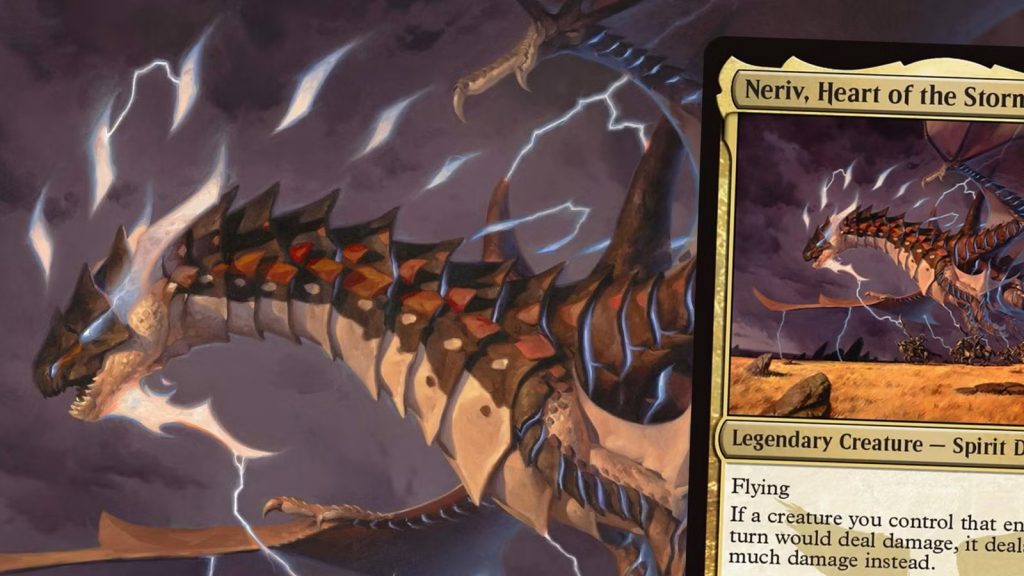
Neriv, Heart of the Storm is not the kind of commander that quietly draws three extra cards and asks everyone to be normal about it. Neriv wants creatures to enter, hit immediately, and turn small chunks of damage into problems.
That makes Neriv Heart of the Storm EDH decks exciting, but also a little fragile. Compared to other popular commanders in EDH, Neriv is less of a value engine and more of a damage amplifier. It rewards timing, haste enablers, token copies, ETB burn, and knowing when to stop setting up and actually kill someone.
The short answer: Neriv is strong, fun, and explosive, but not as broadly reliable as the most popular EDH commanders. It plays best as a mid-power to upgraded casual commander, especially if your group likes creature combat and big one-turn swings.
What Neriv, Heart of the Storm Actually Does
Neriv, Heart of the Storm is a Mardu legendary Spirit Dragon. Its key ability says that if a creature you control that entered this turn would deal damage, it deals twice that much damage instead.
That wording matters.
Neriv does not only care about combat damage. It also works with creatures that deal damage through triggered abilities, activated abilities, or enter-the-battlefield effects. A hasty Dragon that attacks the turn it enters gets doubled. A creature that enters and deals damage to each opponent gets doubled. A Myriad token that enters tapped and attacking can also benefit because the token entered this turn.
That gives Neriv a different texture than a normal aggro commander. You are not just building “attack with creatures.” You are building around creatures that matter immediately.
The main Neriv deck themes are:
- Haste enablers
- ETB damage
- Token copies
- Myriad creatures
- Dragons
- Extra combat steps
- Damage doublers
- Temporary reanimation
- Blink or flicker effects
- Commander damage bursts
The deck has a clear promise: play a creature, make it count now.
Neriv vs. Krenko, Mob Boss
Krenko, Mob Boss is one of the cleanest examples of a commander that builds its own army. Krenko taps to create Goblin tokens equal to the number of Goblins you control. That means the deck naturally snowballs if Krenko survives even one turn cycle.
Neriv is very different.
Krenko creates the board. Neriv rewards the board for entering and dealing damage right away.
That makes Krenko more self-contained. A basic Krenko deck can play Goblins, give Krenko haste, tap him, and start multiplying. Neriv needs more pieces. You usually want creatures that deal damage, creatures with haste, ways to make token copies, or cards like Fervor that let your creatures attack immediately.
Krenko is better if you want:
- A commander that makes its own creatures
- Goblin tribal
- Combo potential from a simple engine
- A mono-red deck with a clear plan
- Board growth over several turns
Neriv is better if you want:
- Mardu removal and recursion
- Big one-turn damage spikes
- Dragon and token-copy synergies
- Combat damage plus ETB damage
- A deck that feels less linear than Krenko
Krenko usually scares the table because everyone knows what happens if the Goblins start doubling. Neriv can be a little sneakier. You may look like you have a few setup cards, then suddenly a Myriad creature or ETB damage creature turns into a lethal swing.
Neriv vs. Isshin, Two Heavens as One
Isshin, Two Heavens as One is probably the cleanest Mardu comparison. Isshin doubles triggered abilities that trigger when creatures attack. That makes Isshin excellent with attack triggers, token makers, goad cards, Myriad, and combat value engines.
Neriv and Isshin overlap because both like attacking. Both can use Mardu token tools. Both like Myriad cards. Both can turn a normal combat step into a mess.
But they reward different card choices.
Isshin doubles attack triggers. Neriv doubles damage from creatures that entered this turn.
That means Isshin is usually better at value. It can double triggers that make tokens, draw cards, drain opponents, create Treasure, or force awkward blocks. Neriv is less flexible. It mostly cares about damage. But when Neriv works, the damage gets out of hand quickly.
For example, a Myriad creature with Isshin may create extra tokens because the attack trigger happens twice. With Neriv, the tokens that enter can deal double combat damage if they connect. If the card has both a strong attack trigger and damage output, then the comparison gets more interesting.
Isshin is better if you want a more stable Mardu combat deck.
Neriv is better if you want a more explosive Mardu damage deck.
That distinction matters. Isshin often wins by stacking advantages. Neriv often wins by finding one turn where the table did not leave enough blockers or interaction.
Neriv vs. Xenagos, God of Revels
Xenagos, God of Revels is a classic big-threat commander. At the beginning of combat on your turn, Xenagos gives a creature haste and a power/toughness boost equal to its power. The result is simple: play huge creature, attack very hard.
Neriv and Xenagos both like haste. They both turn creatures into immediate threats. They both can make one player disappear if the table does not respect the combat step.
But Xenagos is more focused. It usually wants one giant creature at a time. Neriv can care about several creatures entering at once.
That makes Xenagos better at the clean Voltron-style plan. One large trampler becomes absurd. Xenagos is also harder to remove in many games because it can sit as an enchantment when devotion is low.
Neriv is wider and trickier. It can double damage from:
- A hasty attacker
- A Dragon with an ETB damage trigger
- A copied creature token
- A Myriad token
- A reanimated creature
- A creature that deals damage through an ability
Xenagos is the better commander if you want the simplest version of “big creature hits hard.” Neriv is better if you want to chain multiple damage sources together and use Mardu tools instead of green ramp.
The tradeoff is obvious. Xenagos gets green ramp and a commander that supplies haste. Neriv gets black and white interaction, but usually has to add haste cards separately.
Neriv vs. Edgar Markov
Edgar Markov is one of the most efficient Vampire commanders ever printed because of Eminence. You get value from Edgar before you even cast him. Every Vampire you cast can build your board, and that pressure starts early.
Neriv does not have anything like that.
Neriv has to be on the battlefield. Neriv has to survive. Then your creatures have to enter and deal damage. That is a lot more work than Edgar asking you to cast Vampires.
Edgar is better if you want:
- Fast tribal pressure
- Token generation from the command zone
- A commander that affects the game before being cast
- A deck that snowballs from low-cost creatures
Neriv is better if you want:
- A less solved deckbuilding space
- Bigger burst turns
- More Dragon and ETB damage options
- A commander that feels different from stock Mardu aggro
Edgar is more powerful on rate. Neriv is more dramatic. That is not a bad thing. Commander is full of decks that are technically “worse” than the most efficient option but much more interesting for the person piloting them.
Neriv vs. Kaalia of the Vast
Kaalia of the Vast is another Mardu commander with a famous game plan: attack and put an Angel, Demon, or Dragon onto the battlefield tapped and attacking. Kaalia cheats on mana. Neriv doubles damage.
Both commanders love scary creatures. Both can use Dragons. Both draw removal because people can see where the game is going.
The difference is that Kaalia helps you deploy threats. Neriv helps those threats deal more damage once they are already entering.
Kaalia is better at getting expensive creatures into play without paying full cost. Neriv is better when the creatures entering have haste, damage triggers, or token-copy support.
A Kaalia deck asks, “What is the most terrifying creature I can put into play for free?”
A Neriv deck asks, “What creature entering this turn can deal the most damage right now?”
Those are close, but not the same.
Kaalia may be stronger when built efficiently because cheating mana is one of the most powerful things you can do in Commander. Neriv has a lower floor, but it can use cards that Kaalia does not care about as much, especially Myriad, temporary tokens, and creatures with immediate damage effects.
Neriv vs. Korvold, Fae-Cursed King
Korvold, Fae-Cursed King is a value engine. It turns sacrificing permanents into cards and counters. That means Korvold naturally grows, draws, and fuels the next turn.
Neriv does not draw cards by itself. That is one of the biggest differences.
Korvold can recover from disruption because the commander helps rebuild resources. Neriv usually needs the deck to supply the card advantage. If Neriv is removed after you spend a turn setting up haste and damage pieces, you may be left with a pile of cards that do not do enough on their own.
That does not mean Neriv is bad. It means you need to build responsibly.
A Neriv deck should not be 35 exciting damage cards and five ways to draw. It needs real card flow, removal, ramp, and protection. The fun cards are fun because the deck functions. Otherwise you just sit there with a seven-mana Dragon and a dream.
Where Neriv Is Strongest
Neriv is strongest when your deck turns entering the battlefield into immediate pressure.
The best Neriv cards usually do at least one of these things:
- Give creatures haste
- Create attacking tokens
- Deal damage when creatures enter
- Copy creatures temporarily
- Reanimate creatures for one turn
- Add extra combat steps
- Protect Neriv for the key turn
Fervor is a simple example of a card that makes Neriv better because it lets new creatures attack right away. Haste turns Neriv’s replacement effect from “nice bonus” into “you may die now.”
Myriad is also excellent. Cards like Blade of Selves can create token copies that enter tapped and attacking, which lines up cleanly with Neriv’s damage-doubling text. If you are testing that style of build, ProxyKing has a Blade of Selves MTG proxy that fits the kind of card Neriv players often want to try before committing to a final list.
Neriv also works well with ETB damage cards. A creature entering and dealing damage can double that damage immediately. That gives the deck reach even when combat is messy.
Where Neriv Struggles
Neriv’s biggest weakness is that it needs the board, the timing, and the payoff to line up.
The commander does not protect itself. It does not draw cards. It does not make mana. It does not create tokens. It does not give haste. It only multiplies damage from creatures that entered this turn.
That is powerful, but narrow.
Neriv can struggle against:
- Cheap spot removal
- Pillowfort effects
- Fog effects
- Lifegain decks
- Faster combo decks
- Heavy board wipes
- Decks with many flying blockers
- Tables that remove commanders on sight
The best way to fix this is not to add more expensive damage cards. It is to add structure.
You want ramp, protection, card draw, cheap removal, and ways to rebuild. You also want enough low and mid-cost plays that you are not waiting until turn six to start playing Magic. A Neriv deck with only giant Dragons may look great in a decklist image, but actual games will punish that curve.
What Power Level Is Neriv In EDH?
Neriv usually fits best around upgraded casual or mid-power EDH. With strong synergy, good protection, and a tuned mana base, it can move higher. With clunky Dragons and not enough card advantage, it can feel slower than it looks.
Under the Commander Brackets language, many Neriv decks naturally live around Bracket 3: Upgraded. That is the space for decks with strong synergy, better card quality, and the ability to win through a big planned turn without becoming full cEDH.
Neriv can be built lower or higher than that. A casual Dragon build with pet cards may sit closer to precon-plus. A tuned list with fast mana, tutors, compact combos, and premium protection can become much sharper.
The commander is not locked to one level. The card choices decide the table.
Should You Build Neriv?
Build Neriv if you like Mardu combat decks but want something more explosive than normal creature aggro. It is a good commander for players who enjoy planning a big turn, counting damage carefully, and making cards like Fervor or Blade of Selves look better than they do in an average deck.
Skip Neriv if you want your commander to generate steady value by itself. If your favorite commanders draw cards, make mana, or create tokens without help, Neriv may feel demanding.
A good Neriv deck is not automatic. That is part of the appeal. You get rewarded for sequencing, threat assessment, and deckbuilding discipline. You also get punished when you keep a hand full of expensive creatures and no ramp. Commander remains a cruel teacher.
For casual testing, proxies are useful because Neriv builds can change a lot after a few games. The first version may lean Dragons. The next version may lean Myriad. Then you discover ETB burn and suddenly half the deck is under review. ProxyKing’s Proxy Use Policy explains the casual and playtesting context clearly, which is the right lane for testing Commander ideas like this.
Final Verdict
Neriv, Heart of the Storm compares well to popular EDH commanders if you judge it by excitement and burst potential. It compares less well if you judge it by raw consistency.
Krenko builds a board more easily. Isshin generates broader combat value. Xenagos gives haste and power from the command zone. Edgar Markov pressures the table before being cast. Kaalia cheats mana. Korvold draws cards and grows through normal gameplay.
Neriv does not do those things.
Instead, Neriv turns new creatures into immediate damage threats. That makes it a great commander for players who want a Mardu deck with a clear identity, high ceiling, and enough moving parts to stay interesting.
It is not the safest commander in EDH. It is not the most efficient. But when Neriv works, the table notices.
FAQs
Is Neriv, Heart of the Storm a strong EDH commander?
Yes, Neriv can be strong, but it is more explosive than consistent. It needs haste, ETB damage, token copies, or other support cards to turn its ability into real pressure.
Is Neriv better than Isshin, Two Heavens as One?
Not usually in broad consistency. Isshin is better for general Mardu attack-trigger value. Neriv is better when the deck is built around creatures entering and dealing large amounts of damage right away.
Does Neriv work with Fervor?
Yes. Fervor gives your creatures haste, which means creatures that entered this turn can attack immediately. If those creatures deal combat damage while Neriv is out, that damage is doubled.
Does Neriv work with Myriad?
Yes, Neriv works well with Myriad tokens because those token copies enter the battlefield that turn. If they deal damage while Neriv is on the battlefield, Neriv can double that damage.
Is Neriv better as Dragons, tokens, or burn?
The best Neriv builds often mix all three. Dragons give large bodies and useful damage triggers. Tokens and Myriad create multiple new attackers. Burn-style ETB damage gives the deck reach without relying only on combat.
What kind of table is Neriv best for?
Neriv is best for upgraded casual EDH tables where players are fine with big combat turns, strong synergy, and some explosive finishes, but are not expecting full cEDH efficiency.
References
Share this Post
Product Categories
- Lorcana3535 products
- MTG Proxy Cards23032303 products
- MTG Proxy Sets2323 products
- Artifact351351 products
- Black310310 products
- Blue261261 products
- Colorless6666 products
- Green283283 products
- Land MTG Proxy Cards444444 products
- Multi-Colored202202 products
- Red176176 products
- White212212 products
- Pokemon2626 products
Recent Posts
- Protection From a Color in MTG: Damage, Enchanting, Blocking, and Targeting
- ProxyKing Customer Service: What Our Hands-On Testing Says About the Current Operation
- Best Expensive Counterspells to Proxy for High-Power Commander Testing
- How to Proxy Reserved List Cards for a Cube Without Rebuilding the Whole Cube
- Best Fetch Lands to Proxy for Commander and Multi-Deck Testing