
Lorcana’s Rising Popularity: What That Means for the Proxy Market
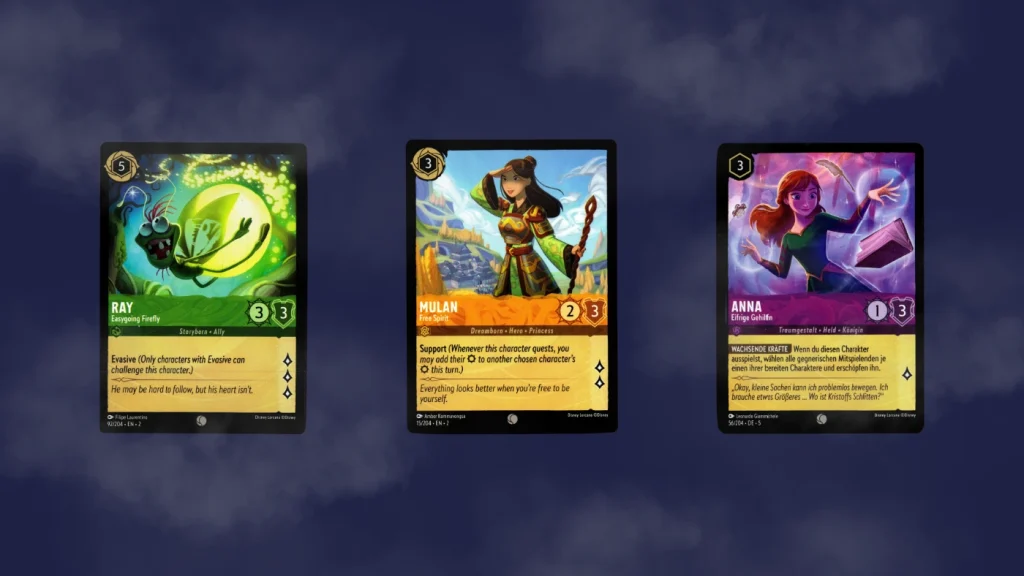
Disney Lorcana isn’t a niche side project anymore. It has a real competitive circuit, big crowds, frequent set releases, and—no surprise—volatile card prices. All of that changes how, why, and when players reach for proxies. Here’s how it works, and what I believe matters most for players and stores who want healthy games without breaking the bank.
Why Lorcana is everywhere right now
The short version: organized play got big, fast. The Disney Lorcana Challenge series launched with arena‑sized caps (2,048 seats for the first U.S. and EU events) and kept scaling up as demand surged. That’s not a theory; it’s in the event materials and announcements from the time.
Attendance followed. Public tallies show multiple 1,800–2,000+ player weekends across Atlanta, Lille, Bochum, and others during the 2024 season, with Chicago, Fort Worth, Bologna, Toronto, Las Vegas, Seattle and more filling out a global calendar. These aren’t locals‑only showdowns; they’re convention‑hall tournaments.
On top of that, the game’s live‑service signals—bans, rotation, and new rarities—arrived quickly. In April 2025, two cards (Hiram Flaversham – Toymaker and Fortisphere) were banned from Core Constructed, a sign the devs are actively curating the meta. Later that year, the ninth set, Fabled, introduced Epic and Iconic rarities and ushered in rotation, with official posts and coverage spelling out the changes. Translation: the card pool moves, and players keep chasing updates.
Finally, supply keeps ebbing and flowing. Ravensburger fast‑tracked early reprints to meet demand, then broadened distribution to more countries. That mix—big events, evolving rules, and periodic reprints—keeps interest high and the market lively.
Scarcity, prices, and the normal reasons proxies show up
Early Lorcana had classic launch problems: sellouts, thin hobby allocations, and a lot of “sorry, we’re out” signs. Ravensburger announced a reprint of The First Chapter (and later moved the timeline up), which helped, but the shock to supply/price expectations stuck around for a while. It’s one reason proxies entered everyday conversation so quickly—players wanted to test decks before singles stabilized.
Even once product flowed, prices on playables and chase cards didn’t always sit still. TCGplayer’s market notes from October 2024 captured sharp month‑over‑month gains across both budget staples and high‑end “Enchanted” foils. When a $5 role‑player jumps 30% in a month, testing a list with a placeholder before you commit cash makes sense; when an Enchanted spikes by $60+, it’s almost mandatory to sanity‑check your plan.
Fast forward to 2025: sets like Archazia’s Island and Reign of Jafar kept the release cadence brisk; Fabled then landed with new rarities and rotation, and the official site bragged about sell‑through. Popular IP plus fresh mechanics equals continued demand, and demand always puts pressure on inventory. That’s the loop.
In other words, proxies are not just a “can’t get it” band‑aid. They’re a planning tool. They let you test 75 cards today while the market calms down, or while you watch whether a staple gets reprinted next set and dips next week. And if your shiny Enchanted lives in a graded slab, a proxy lets you actually shuffle the deck without sweating fingerprints—yes, that’s a real use case.
What’s allowed: proxies, test cards, and tournament reality
Here’s the part that trips people up. Lorcana’s official program draws a hard line between proxy cards, test cards, and counterfeits:
- Proxy cards (in the official sense) are judge‑issued replacements for a card damaged during the event; they’re valid only for that event. Players can’t self‑print these. Stores can only allow them as the tournament rules permit.
- Test cards are homemade placeholders (write a name on a basic card, or use a printed stand‑in). They’re allowed only for non‑sanctioned, non‑commercial play inside HSP stores. If there are prizes or it’s a sanctioned tournament, they’re not allowed.
- Counterfeits—unauthorized reproductions that try to pass as real—are strictly prohibited. Full stop.
If you’ve played other TCGs, this will feel familiar. Magic’s judge policy, for example, treats proxies as judge tools in rare situations, not player‑supplied substitutes, and many large TOs post “no proxies” in event listings. Lorcana’s tournament docs, Hobby Store Program terms, and typical event pages line up with that approach. So yes: for sanctioned play, bring real cards. For kitchen‑table testing or a store’s casual night that’s not reported to OP, ask your TO what’s acceptable and assume “clearly marked test cards” at most.
Two more practical notes. First, rotation means some older sets leave Core Constructed and later reprints might bring certain cards back—so a paper proxy can bridge the gap while you decide whether to buy back in. Second, bans happen in healthy games; they protect formats but can strand inventory. Proxies let you keep reps with a shell while you adjust, rather than panic‑buying into the wrong pivot.
None of this is legal advice; it’s just the state of play. The safe rule: sanctioned events = genuine cards, casual nights = ask first.
What Lorcana’s growth means for the proxy market
Here’s the downstream effect as I see it.
1) Playtesting is constant now. With a real tournament ladder and rotating formats, players iterate more. That increases demand for “paper stand‑ins” during brew cycles, especially in the two weeks after each set when prices and lists are in motion. Big events and prize promos amplify this churn, because more people need to be ready by a deadline.
2) Rotation and reprints encourage “wait‑and‑see” buying. Fabled’s rotation and the broader reprint posture push some buyers to hold off on certain staples until the dust settles. Proxies cover the short term while you figure out whether a card is getting reprinted (or rotated out), and whether you want the baseline version or to splurge on a premium copy later. The official news feed and community coverage around rotation make this a permanent part of the Lorcana rhythm.
3) Casual scenes get larger—and more price diverse. As distribution expands, more countries and new players join. Not everyone wants to buy four copies of a $30 rare just to jam games on weeknights, and plenty of folks prefer not to shuffle expensive foils. Clean, clearly labeled test cards keep those tables inclusive without undermining stores’ sanctioned programming. (Again: that “non‑sanctioned only” clause matters.)
4) Prices will spike and dip; proxies buffer the whiplash. You can see the pattern in historical reports—some months the metagame bumps commons and rares; other months the premium chase cards jump hard. Proxies let you separate “Do I like how this 60 plays?” from “Do I want to pay today’s sticker price?” That’s a saner way to buy into any fast‑moving TCG.
5) Stores need clear, posted rules. The Hobby Store Program docs are explicit: judge proxies only in sanctioned events; test cards only for non‑sanctioned, non‑commercial use; no counterfeits. If a store wants to run a budget night or a testing league, label it clearly as casual/non‑sanctioned and spell out what’s allowed so nobody brings the wrong deck to the wrong night, because that’s how feelings (and brackets) get messy.
Practical tips for players (and yes, we keep this short):
- For sanctioned events, bring genuine cards. If something gets damaged mid‑round, call a judge; they’ll decide if a temporary proxy is appropriate.
- For casual nights, ask your TO first. If test cards are allowed, mark them clearly, sleeve everything uniformly, and keep a real decklist handy so no one gets confused about versions or art.
- If you love a blinged‑out Enchanted, consider a play‑copy + a proxy for shuffling while the original stays safe. That’s not being fussy; it’s just avoiding edge dents on a showcase card.
Bottom line
Lorcana’s popularity isn’t a spike; it’s a system: frequent sets, active balance updates, rotation, and big‑room tournaments that actually fill. That system creates real, ongoing reasons for proxies in non‑sanctioned play—testing, budget nights, protecting collectibles—while keeping sanctioned play strictly genuine. If you respect that line, proxies become a helpful tool rather than a headache.
Will the market keep moving? Almost certainly. The official feed is already talking up next releases and celebrating sell‑outs, which means another round of brewing, buying, and tweaking. Use proxies to learn fast and buy smart, not to shortcut tournament rules. And that’s why it matters.
Share this Post
Recent Posts
Product Categories
ProxyMtG@protonmail.com