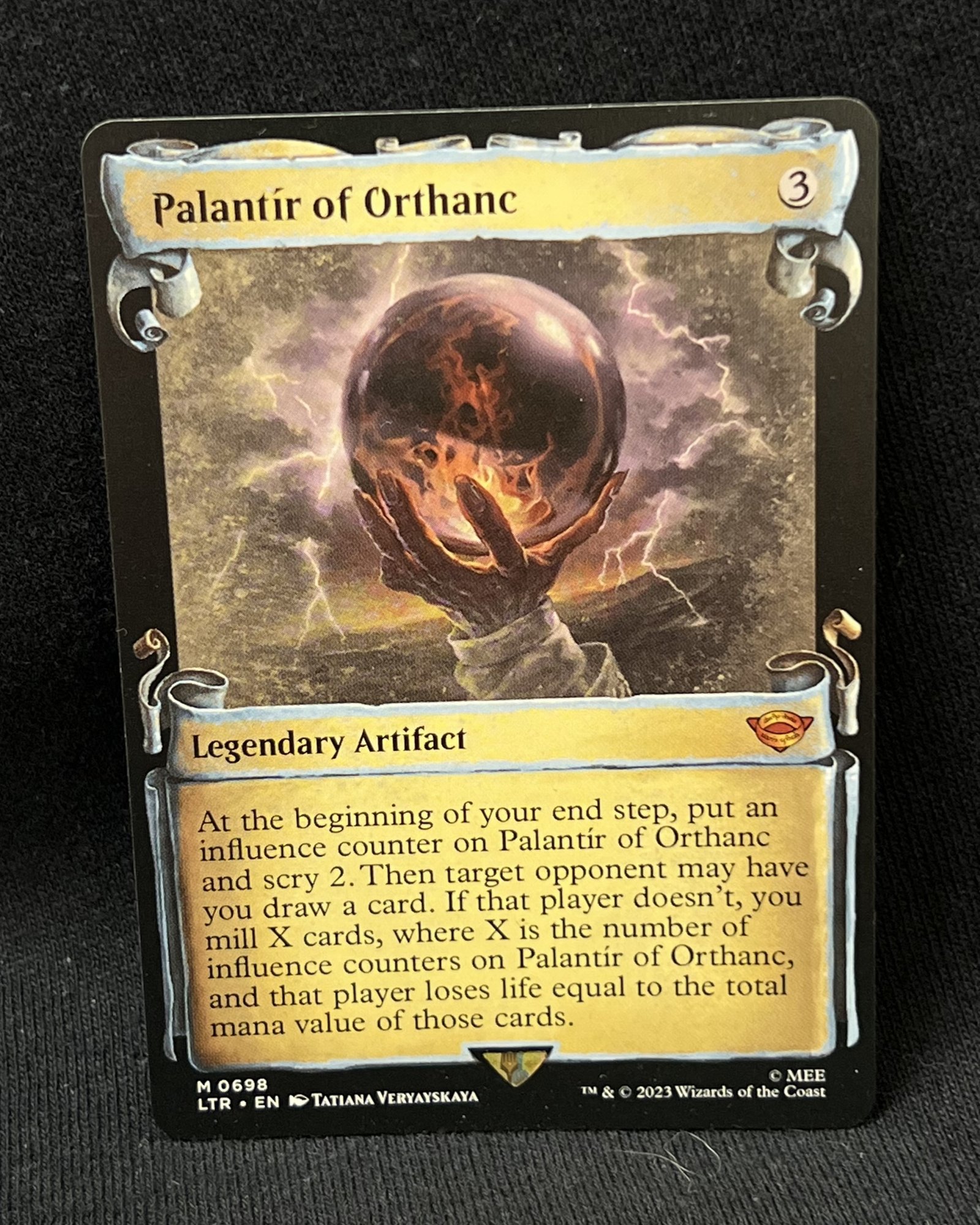

Palantír of Orthanc creates an end-step decision that grows harder for opponents over time. It gains an influence counter, lets you scry two, then asks a targeted opponent whether you should draw a card. If they decline, you mill cards equal to the influence count and that opponent loses life equal to the milled cards' total mana value.
The scry happens before the choice, giving you some control over the immediate possibilities. You can keep useful cards on top if you want the draw, or leave an expensive card visible to your own planning when the life-loss branch would be productive. The opponent still chooses the branch, so the deck should benefit from both cards in hand and cards in the graveyard.
Reanimator and artifact-recursion lists can use the milling as setup. A high-mana-value creature milled may pressure the chosen opponent while becoming a future reanimation target. Lands contribute no life loss, although putting them into the graveyard can help a Life from the Loam strategy in a deck with green.
The influence count increases the amount milled, not the number of cards drawn. As the count grows, declining the draw can become riskier, but a low-curve library may still make that choice manageable. Choose the opponent with the decision you most want to pressure, and remember that the growing mill can eventually consume your own library quickly. The Palantír is at its best when either outcome advances a deliberate resource plan rather than when you need guaranteed conventional card draw.