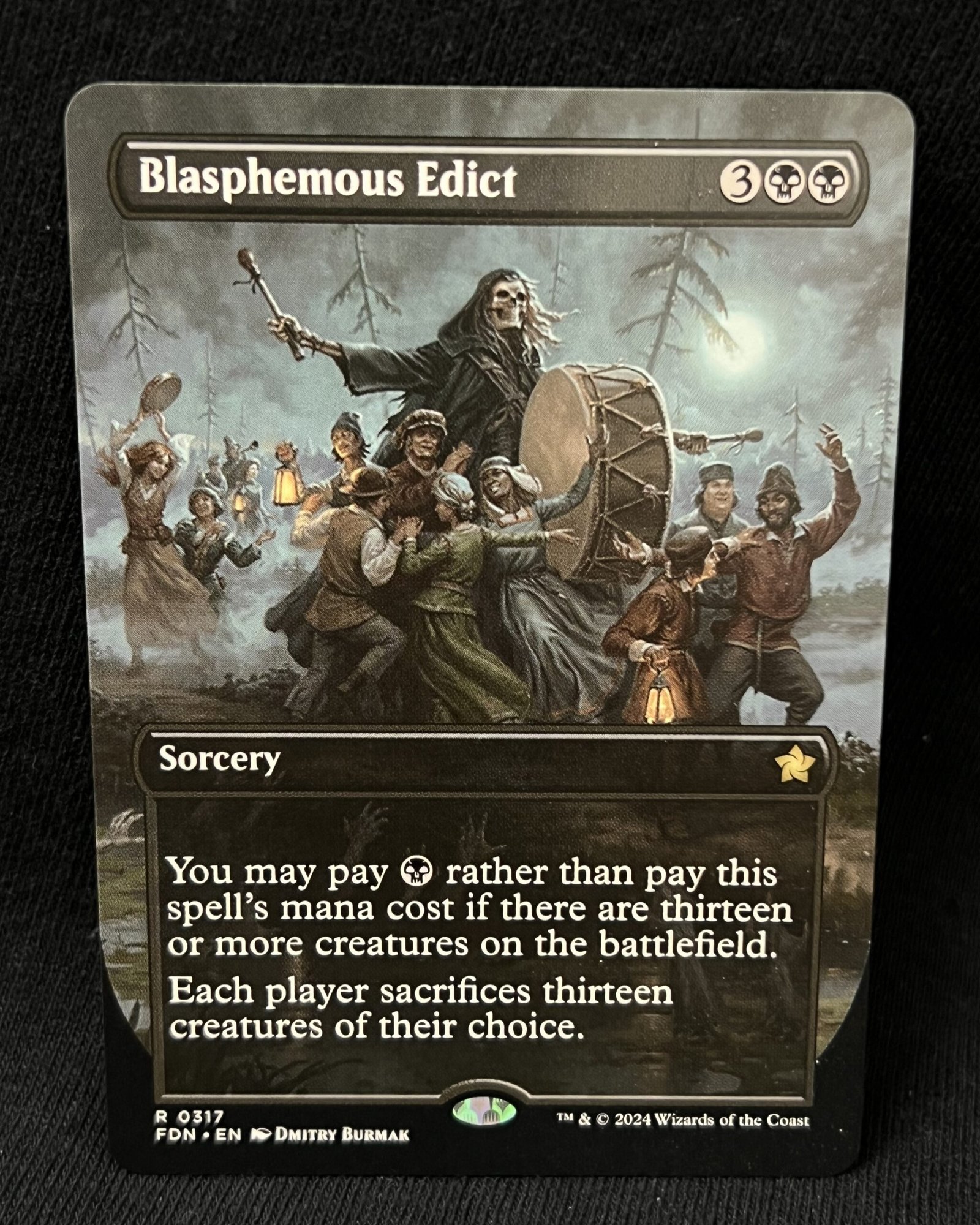


Blasphemous Edict makes each player sacrifice thirteen creatures. When at least thirteen creatures are on the battlefield, you can pay a single black instead of its normal mana cost. This gives black decks a powerful response to crowded boards, especially when opponents have developed several creatures that resist ordinary targeted destruction.
The sacrifice effect can remove indestructible creatures and does not target individual creatures. Players with more than thirteen choose which thirteen to lose, while a player with fewer sacrifices all they can. Your board is affected too. Token-heavy games help enable the reduced casting cost, but the creatures do not have to belong to one player for the threshold to be reached.
A productive sacrifice deck needs a supply of bodies, a reason to let them die, and a way to turn that exchange into progress. Recurring creatures and token makers provide material, while effects such as Blood Artist can add pressure to deaths that already serve another purpose. Count each return cost and mana payment before treating a sequence as a repeatable combo.
The alternative cost is determined as you cast the spell. Later changes to the creature count do not retroactively change what you paid. Since players choose their sacrifices, a huge token army may preserve its best creatures. Evaluate the remaining board before treating the effect as a complete creature reset.