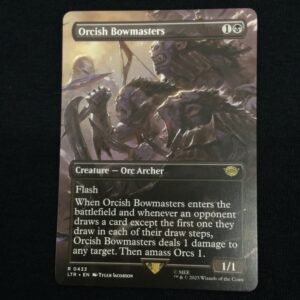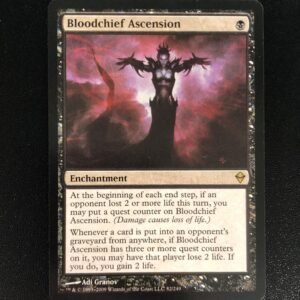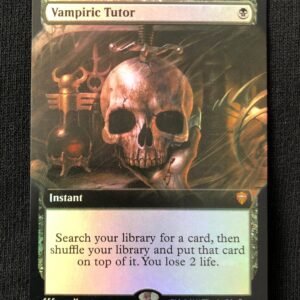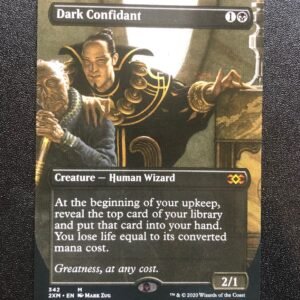
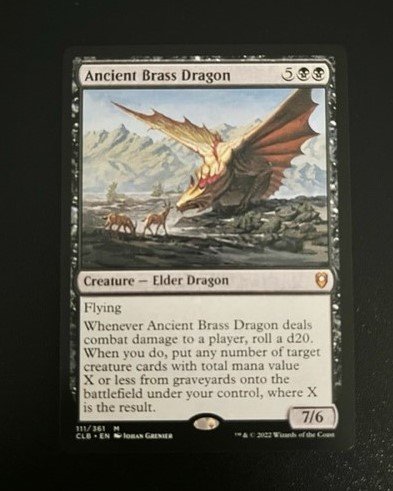


Ancient Brass Dragon turns a combat hit into a graveyard shopping trip. When it deals combat damage to a player, you roll a d20 and can return creature cards from graveyards with total mana value up to the result. The creatures enter under your control, so both your own discarded threats and opposing creatures become possible rewards.
The total matters more than the largest single card. A moderate roll can return several inexpensive creatures with useful entry abilities instead of one large threat. Sacrifice and reanimation decks often stock their own graveyards naturally, while ordinary removal fills opposing graveyards over the course of a game. A wider selection makes more die results useful.
You roll before selecting the targets for the resulting return ability, allowing you to choose a package that fits the number. Opponents can still respond to that ability with graveyard interaction. Flying helps the Dragon connect, and haste from a card such as Lightning Greaves can reduce the wait between casting a seven-mana creature and receiving its first payoff.
Double strike can produce two separate combat-damage triggers if the Dragon hits a player in both damage steps. Even without that support, one successful attack can rebuild a board. The card needs help getting through, however: simply entering the battlefield does not reanimate anything. Prioritize an open attack and useful graveyard targets over assuming that every roll will deliver the most expensive creature available.