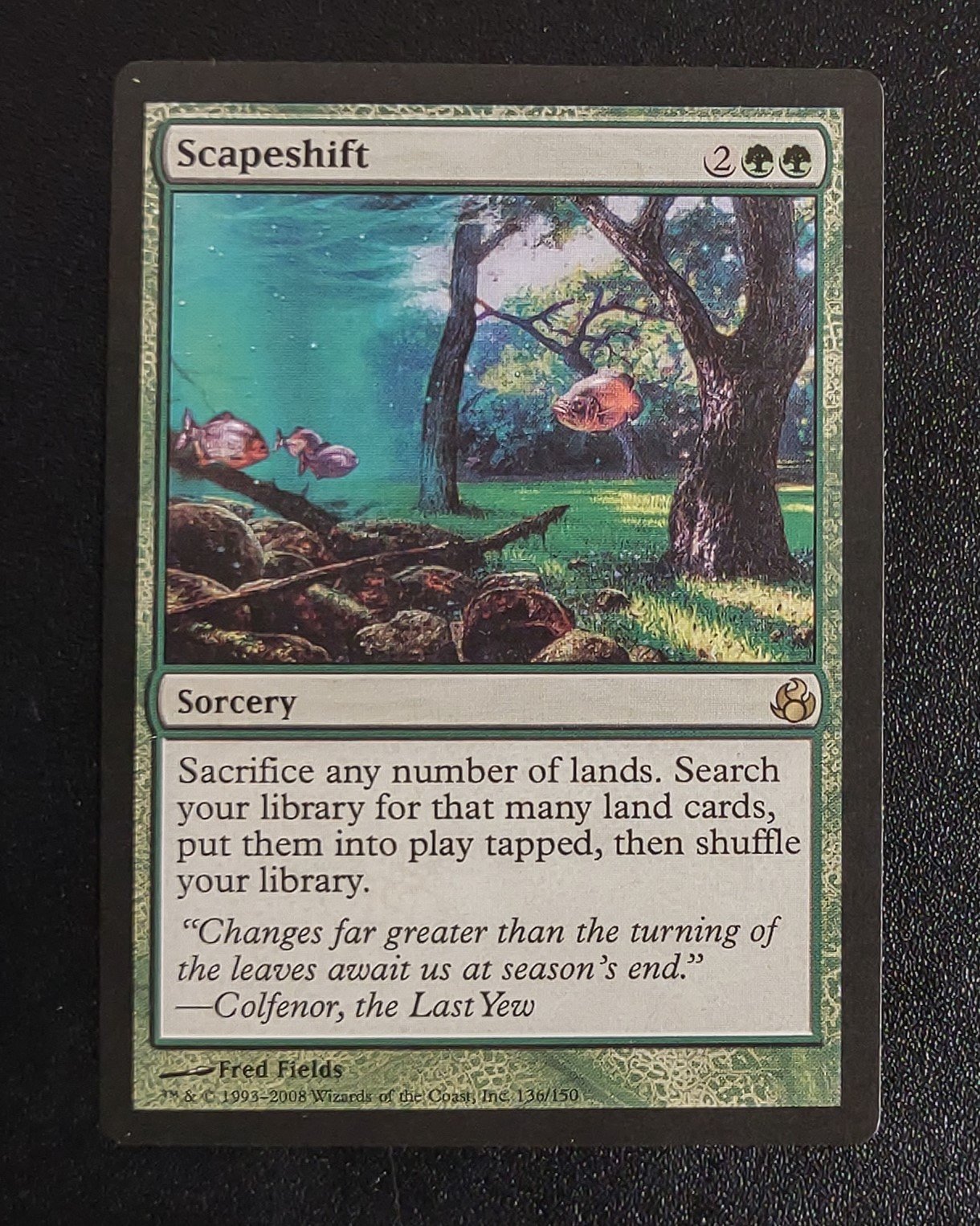


Scapeshift exchanges the lands you already control for the lands your next turn needs. You sacrifice any number of lands as the spell resolves, then search for up to that many land cards and put them onto the battlefield tapped. The search is not limited to basics, making it useful for assembling utility-land packages as well as generating a concentrated burst of landfall triggers.
Field of the Dead is a familiar payoff. A suitable set of differently named lands can meet its seven-name condition, and lands entering together can generate several Zombie triggers once the requirement is satisfied. You need to build the mana base with enough distinct names and understand which lands will remain after the exchange.
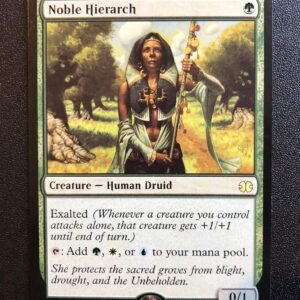
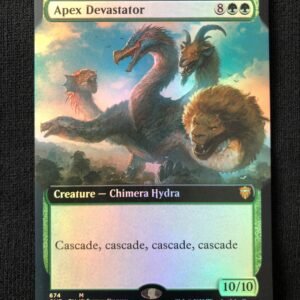
Landfall decks can instead focus on permanents already in play. Lotus Cobra generates mana from the incoming lands, while Avenger of Zendikar can place many counters on its Plants. Titania, Protector of Argoth rewards the sacrificed lands with Elementals, connecting the outgoing and incoming halves of the spell to different payoffs.
The lands are sacrificed during resolution, not as an additional casting cost. If Scapeshift is countered, you have not already sacrificed them to pay for it. Once it begins resolving, players do not get a response window between the sacrifice and the search. The searched lands enter tapped even if they would ordinarily enter untapped.
Count both resources and consequences before casting. Trading every land may create a powerful board but leave little immediate interaction unless your engine produces mana from the entries. Sometimes replacing only a few lands is enough to find the necessary utility piece while preserving untapped sources. The strongest line is the one that achieves your actual payoff without sacrificing more flexibility than the turn requires.