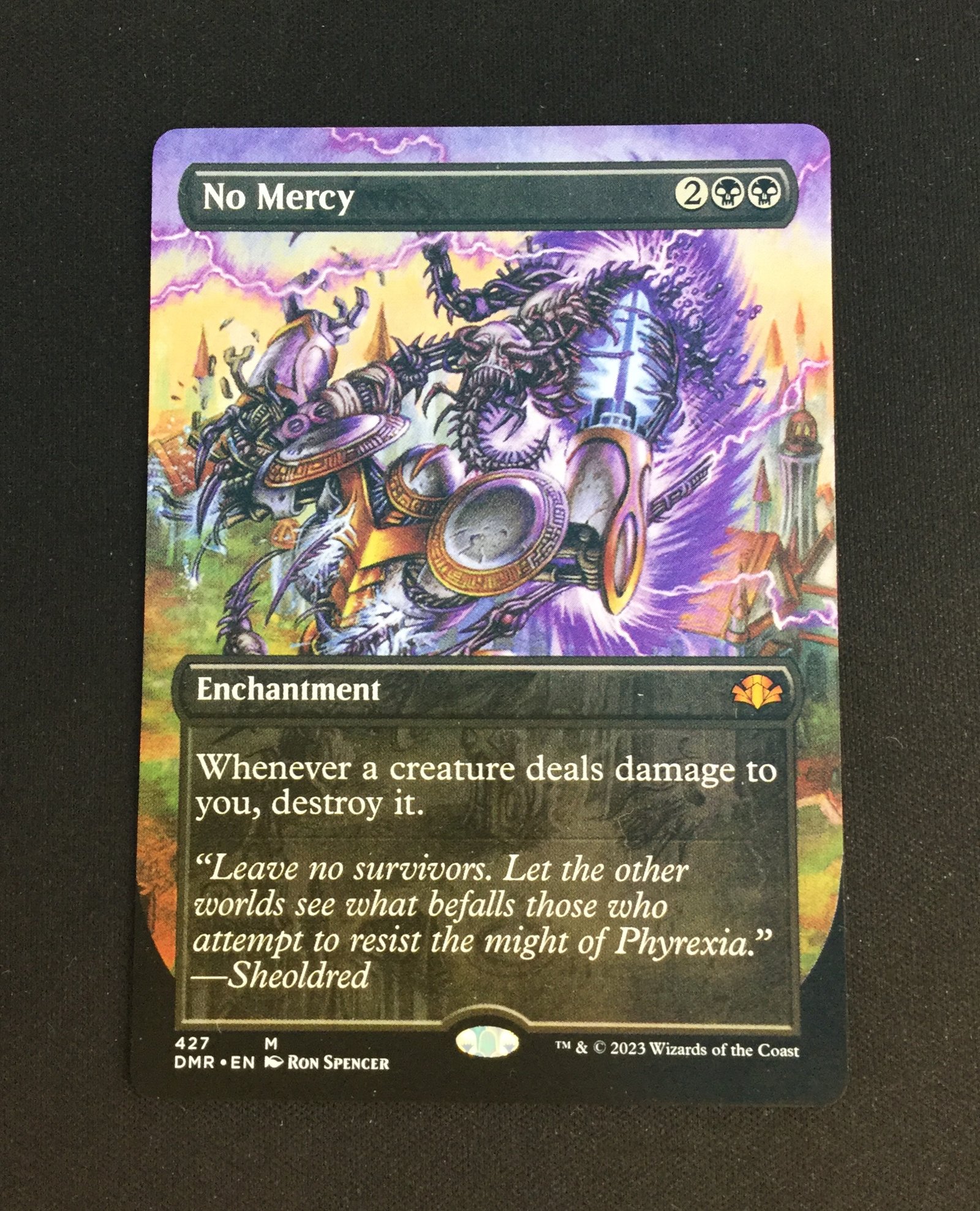


No Mercy makes damaging you costly for the creature responsible. Whenever a creature deals damage to you, the enchantment triggers to destroy it. That discourages attacks from creatures an opponent wants to preserve and can give a slower black deck room to develop behind a visible consequence for aggression.
The damage still happens. No Mercy is not a fog, does not reduce the damage, and does not protect you from losing the game before its trigger resolves. Indestructible creatures can survive the destruction, and damage to a planeswalker you control is not damage to you. Those limits matter when deciding whether the enchantment provides enough defense against a particular board.
It can work alongside life gain from Gray Merchant of Asphodel or other sources that help you survive the hits you are willing to take. Other deterrents and removal can narrow the number of profitable attacks further. The trigger also applies to noncombat damage from a creature if that creature damages you, rather than only to declared attackers. Against token armies, opponents may be happy to trade bodies for damage, so a board wipe can remain necessary. No Mercy is best viewed as a way to influence combat decisions and punish expensive threats, supported by enough life and interaction that taking the initial damage is a cost your deck can afford.