 : Add
 .

 , or
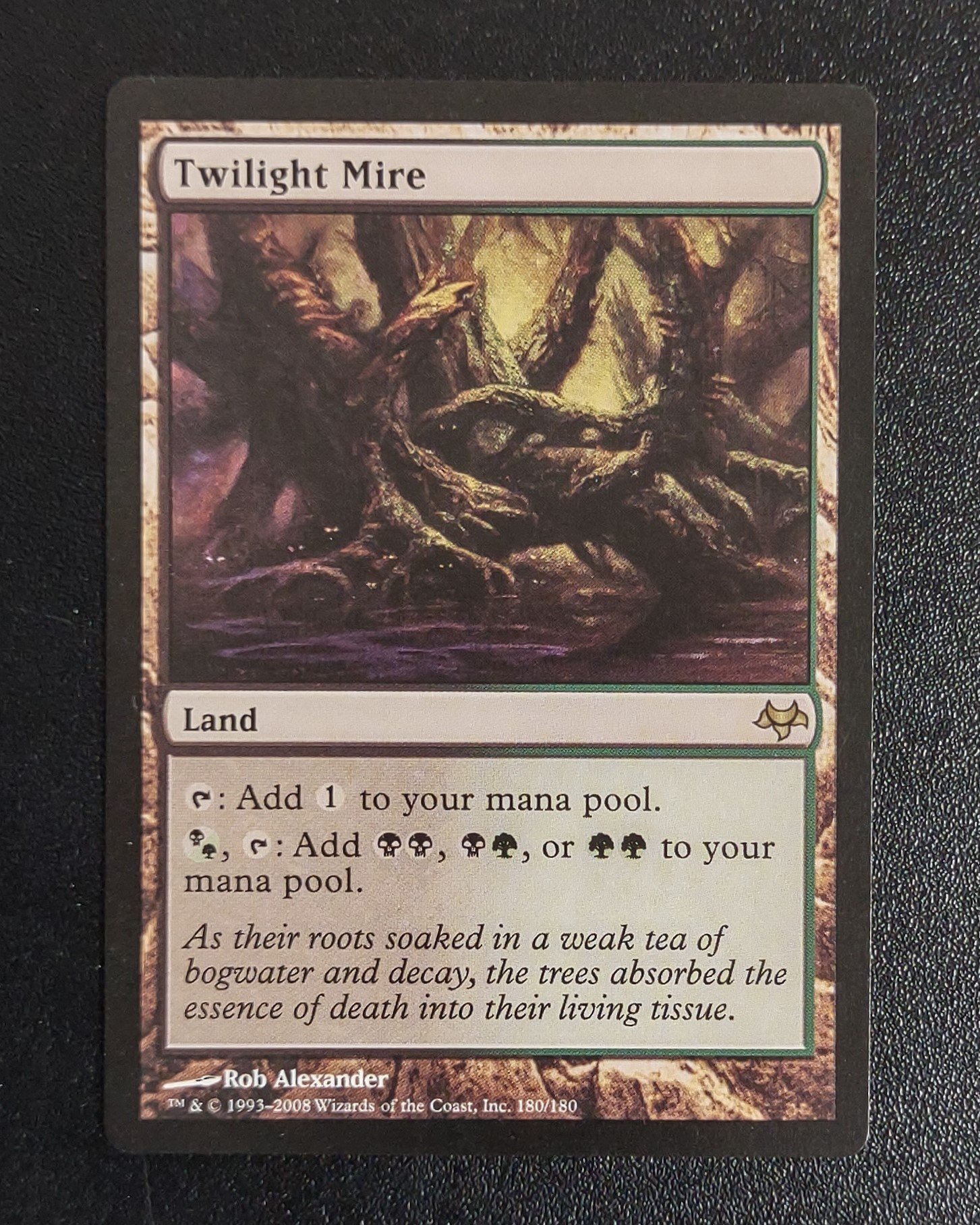
Twilight Mire supports black-green costs by filtering a green or black mana into two mana in a useful combination. It can produce two black, two green, or one of each after you pay the input and tap it. That helps a deck transition between green development and spells with demanding black requirements.
Overgrown Tomb can provide either input color, while Twilight Mire chooses the output that matches the next spell. Eternal Witness’s double-green cost and black recursion illustrate the different demands this flexibility can cover. Mire has a separate colorless ability for times when no suitable input is available. Its filtering does not increase total mana by itself, and an opening hand still needs another colored source.
Plan the turn around both the amount of mana available and the colors each spell requires. A hand containing Sol Ring can have plenty of total mana while still struggling with colored symbols. Keep reliable lands alongside specialized sources, and sequence the source that establishes a missing color before committing resources to a payoff that depends on it.
Mire rewards a mana base with dependable green or black inputs. A collection of colorless utility lands will not enable the filter, even if the deck has plenty of total mana. Consider which early land establishes the input color and which later spell benefits from changing that color into two matching symbols.